Earlier in the week I came across volume 1 of Edward Turney's magazine The Christadelphian Lamp, published in 1874 - the year after Robert Roberts disfellowshipped him and his supporters.
A letter to the editor from Samuel Coffman, (one of the brethren for whom John Thomas coined the name 'Christadelphian' so they could claim exemption from military service as members of a denomination of conscientious objectors) caught my eye. He refers to the views on the sacrifice of Christ being promulgated by Robert Roberts, and the 'considerable private discussions' he had had with Dr Thomas prior to his death, and complained of the tyrannical and suppressive spirit on the part of Roberts.
Within 10 years of the name 'Christadelphian' being chosen for the new denomination, and only two or three years after Dr Thomas' death, it seems that Roberts was foisting on the brotherhood his own new interpretation of the atonement with a 'condemned Christ' and making acceptance of it a condition for fellowship.
Letters and articles from Samuel and John Coffman which appeared in The Christadelphian Lamp show that these 'first Christadelphians' sided with Edward Turney and the Suffolk Street fellowship in opposing both Roberts' authoritarianism and his peculiar explanation of the atonement. One wonders how different the denomination would have been if the advice of one of these first Christadelphians to 'lay aside prejudices and extremes' had been heeded.
Showing posts with label Edward Turney. Show all posts
Showing posts with label Edward Turney. Show all posts
Saturday, May 13, 2006


Sunday, April 02, 2006
The first Christadelphians and politics (2)
I've just received some information from Peter Hemingray, author of John Thomas, His Friends and His Faith, about the registration of conscientious objectors during the American Civil War. I referred earlier to an incident when John Thomas successfully applied for exemption from military service on behalf of 10 believers in the South on the grounds that they were "ministers of religion", while in the North they applied for exemption as members of a denomination named "Christadelphians".
Peter Hemingray has pointed out that the brethren in Virginia were originally known as "Nazarines", rather than "Christadelphians", and refers to a petition* asking for absolute exemption from military service on behalf of the “The Nazarines.” The petition, addressed to John Letcher, who was Governor of Virginia 1860-64, commented on the problem of those exempted from military service being required to perform “non-combatant” service, as a Bill under consideration in the legislature proposed. The petition said: “This is a mistake, at least as far as the Christians called the ‘Nazarines’ are concerned… (we) do not recognize ourselves as citizens in any sense of any of the governments of this world. We therefore admit your right to tax our property. But we would as soon fall down and worship the golden image erected on the plains of Dura by Nebuchadnezzar, than we could yield our persons as the willing slaves of any human authority.”
Peter Hemingray says the petition must have been written in early 1862, for the Virginia Act was passed in March of that year. "Quite who wrote the petition", he wrote, "I do not know: Dr. Thomas seemed to have no knowledge of it for some time afterwards, and I can find no reference to it in the journals of the time. A pity! But I must assume that whoever wrote the petition was behind the inclusion of the 'Nazarines' in the later Confederate Act."
In the Ambassador for April 1865, Dr. Thomas wrote “The Confederate Congress passed an act, exempting them (the Christadelphians in Virginia) from military service, under the name of Nazarenes, on payment of 500 dollars. All are exempted who were members at the time of passing the act:..” On April 15 1863 the Senate passed an Act that said in part:
"So whoever wrote the petition", says Hemingray, "was probably behind the inclusion of the 'Nazarines'.” Records show the Quakers and the Dunkards were particularly active from the time that conscription passed from State to Federal level, in April 1862. Their names were present when the first amendment to name whole religious denominations was passed in September of 1862. The “Nazarenes” were added by a joint committee of the two houses, without any recorded debate, on October 3 1862. (Nazarines and Nazarenes are used interchangeably in the record. And indeed Dr. Thomas uses “Nazarene” when he refers to the same incident later.) However, there is no mention as to who proposed the addition of “Nazarines.”
It seems that this Act of the Confederate Congress is the only official Act that has ever specifically named members of the Christadelphian denomination (albeit under a different name) as exempt from military service. It was passed in 1863 after at least six months of consideration. The brethren in Virginia were still known as “Nazarenes” into the 1870s (and should not be confused with the Church of the Nazarene which is a late nineteenth century offshoot of the Wesleyan “Holiness” movement, or the Nazarene fellowship - still in existence - which grew out of the offshoot from Christadelphianism following the 1873 disfellowship of Edward Turney and David Handley.)
Hemingray noted "It is also interesting that, until very recently, main-stream historians have been quite unable to identify who these 'Nazarines' were. Only recently did a diligent researcher follow the same trail as I did, and correctly identified the 'Nazarines' as coming from the group that a little later became known as Christadelphians**."
He also makes this interesting comment:
One reason this is particularly interesting is that the 'Nazarines' in Virginia were "unpolitical" while the 'Christadelphians' in Illinois (or some of them at least) were 'stalwart Republicans'. It's possible that while the Believers were united in being opposed to military service their reasons for doing so may have differed.
* This was re-published in The Christadelphian for Sept. 1940. It says it was “found among some old Christadelphian magazines,” and appears to be copied from an article appearing in the Christadelphian Advocate for June 1897, p166.
** Peter Brock, an historian of Pacifism, guesses at the connection on p 864 of his Pacifism in the United States.
Peter Hemingray has pointed out that the brethren in Virginia were originally known as "Nazarines", rather than "Christadelphians", and refers to a petition* asking for absolute exemption from military service on behalf of the “The Nazarines.” The petition, addressed to John Letcher, who was Governor of Virginia 1860-64, commented on the problem of those exempted from military service being required to perform “non-combatant” service, as a Bill under consideration in the legislature proposed. The petition said: “This is a mistake, at least as far as the Christians called the ‘Nazarines’ are concerned… (we) do not recognize ourselves as citizens in any sense of any of the governments of this world. We therefore admit your right to tax our property. But we would as soon fall down and worship the golden image erected on the plains of Dura by Nebuchadnezzar, than we could yield our persons as the willing slaves of any human authority.”
Peter Hemingray says the petition must have been written in early 1862, for the Virginia Act was passed in March of that year. "Quite who wrote the petition", he wrote, "I do not know: Dr. Thomas seemed to have no knowledge of it for some time afterwards, and I can find no reference to it in the journals of the time. A pity! But I must assume that whoever wrote the petition was behind the inclusion of the 'Nazarines' in the later Confederate Act."
In the Ambassador for April 1865, Dr. Thomas wrote “The Confederate Congress passed an act, exempting them (the Christadelphians in Virginia) from military service, under the name of Nazarenes, on payment of 500 dollars. All are exempted who were members at the time of passing the act:..” On April 15 1863 the Senate passed an Act that said in part:
VIII Every minister of religion authorized to preach according to the rules of his sect, and now in the regular discharge of ministerial duty, and all persons who have been, since the sixteenth of April, eighteen hundred and sixty-two, and now are, members of the society of Friends, or the association of Dunkards, Nazarines, or Mennonists, in regular membership of their respective denominations: provided that such members shall furnish a substitute or pay a tax of five hundred dollars each into the public treasury.
"So whoever wrote the petition", says Hemingray, "was probably behind the inclusion of the 'Nazarines'.” Records show the Quakers and the Dunkards were particularly active from the time that conscription passed from State to Federal level, in April 1862. Their names were present when the first amendment to name whole religious denominations was passed in September of 1862. The “Nazarenes” were added by a joint committee of the two houses, without any recorded debate, on October 3 1862. (Nazarines and Nazarenes are used interchangeably in the record. And indeed Dr. Thomas uses “Nazarene” when he refers to the same incident later.) However, there is no mention as to who proposed the addition of “Nazarines.”
It seems that this Act of the Confederate Congress is the only official Act that has ever specifically named members of the Christadelphian denomination (albeit under a different name) as exempt from military service. It was passed in 1863 after at least six months of consideration. The brethren in Virginia were still known as “Nazarenes” into the 1870s (and should not be confused with the Church of the Nazarene which is a late nineteenth century offshoot of the Wesleyan “Holiness” movement, or the Nazarene fellowship - still in existence - which grew out of the offshoot from Christadelphianism following the 1873 disfellowship of Edward Turney and David Handley.)
Hemingray noted "It is also interesting that, until very recently, main-stream historians have been quite unable to identify who these 'Nazarines' were. Only recently did a diligent researcher follow the same trail as I did, and correctly identified the 'Nazarines' as coming from the group that a little later became known as Christadelphians**."
He also makes this interesting comment:
It is fascinating for the insistence on the very fundamental grounds of our stand then and now against military service: it is that our citizenship is in Heaven. It was not then, nor despite some of our literature, should it be now, primarily because we follow the command of Jesus to Peter, in Mt. 26:52; “Put up thy sword.” This is true, but it is not the cornerstone of our rejection of military service. Rather, it is because we take no part in politics, offer no opinions on our government, live at peace with the whole world and wait patiently for “a new heaven and a new earth.”
One reason this is particularly interesting is that the 'Nazarines' in Virginia were "unpolitical" while the 'Christadelphians' in Illinois (or some of them at least) were 'stalwart Republicans'. It's possible that while the Believers were united in being opposed to military service their reasons for doing so may have differed.
* This was re-published in The Christadelphian for Sept. 1940. It says it was “found among some old Christadelphian magazines,” and appears to be copied from an article appearing in the Christadelphian Advocate for June 1897, p166.
** Peter Brock, an historian of Pacifism, guesses at the connection on p 864 of his Pacifism in the United States.
Monday, February 06, 2006
What did Christadelphians set out to be? (8)
The events of 1864, 1873 and 1885 changed the direction of the movement. I have already looked at one of the consequences of these events which were to have a lasting influence in Christadelphianism:
2. As Christadelphians became less tolerant of alternative views there was a shift from diversity to division.
Between 1864 and 1885 there were at least 6 divisions within the Christadelphian denomination, including the major divisions caused by the disfellowships of George Dowie in 1864, Edward Turney in 1873 and Robert Ashcroft in 1885. Other 'minor' divisions (although not minor for the individuals involved) included the following.
Writing of the Christadelphian ‘proclivity for schism' in this period sociologist Bryan Wilson refers to a
Robert Roberts himself confessed:
Bryan Wilson, in Social Aspects of Religious Sects (London University PhD thesis 1955), calculated on the basis of figures provided by Roberts in The Christadelphian that there were about 6,000 brethren in the 'central' fellowship in 1884, and less than 3,000 the year after. Andrew Wilson provides extensive statistical information to demonstrate the sudden and dramatic departure of a large number of brethren from Christadelphianism. In overall terms the loss was between 35% and 44% of the brethren in the U.K. compared to a national annual increase in population of about 10%.
Bryan Wilson wrote that "Barely a month passed without a division in some ecclesia."
Andrew Wilson summarised this period of schism this way (my emphases in bold):
- There was a shift from the openness to change, from the exciting and lively debate, and the tolerance of the early years, towards a rigid dogmatism.
2. As Christadelphians became less tolerant of alternative views there was a shift from diversity to division.
Between 1864 and 1885 there were at least 6 divisions within the Christadelphian denomination, including the major divisions caused by the disfellowships of George Dowie in 1864, Edward Turney in 1873 and Robert Ashcroft in 1885. Other 'minor' divisions (although not minor for the individuals involved) included the following.
- Charles Dealtry, who had been baptised by John Thomas, actively preached the Christadelphian faith between 1866 and 1868 and converted many people to Christadelphianism, especially in Whitby. He was denounced in 1868 for teaching that Jesus was the son of Joseph (although he was never disfellowshipped by any ecclesia). Roberts reported in The Ambassador that the converts made by "Mr. Dealtry" (he was no longer called "Bro Dealtry") in Whitby were to be "re-immersed and organized as a Christadelphian ecclesia".
- An unnamed ecclesia in 1876 was challenged by Roberts for teaching a doctrine he called "No Willism". It emphasised the divinity of Jesus and included the idea that Jesus pre-existed as Jehovah of the Old Testament, and therefore could have no other will than that of God Himself. Roberts responded by emphasising the humanity of Jesus in a series of articles and by 1877 it was thought that "No Willism" had been stamped out.
- Soon after a pamphlet was published by John Birkenhead entitled Letters on the Doctrine of God manifestation, and Extracts from the Most Recent and Advanced Writings of the Late JOHN THOMAS, M.D. It's clear that Thomas's Christology emphasised the divinity of Jesus to a greater extent than Roberts did, especially in his response to 'No Willism' which emphasised (or over-emphasised) the humanity of Jesus. Roberts responded to the pamphlet by querying whether Christ, as the manifestation of God, had a will of his own. He was clearly trying to link Birkenhead's ideas with the "No Willism" heresy he had endeavoured to stamp out. It's unknown how many people were affected, but Andrew Wilson commented that while the numbers were likely to be small "the amount of disturbance caused ... was substantial".
Writing of the Christadelphian ‘proclivity for schism' in this period sociologist Bryan Wilson refers to a
In his Religion in Secular Society (C.A. Watts & Co, London, 1966, pp 211-212) Bryan Wilson writes of sects which
"series of bitter schisms. Excommunication of members and of one ecclesia by another became a common pattern in the attempt to maintain purity of doctrine and association. Whilst undoubtedly some schisms were at least partly a consequence of struggles for informal influence between leading brethren, there was always a strong concern for obedience to the word of God which led to over-scrupulousness, to purging evil men who arose in the fellowship, and hence to divisiveness."Bryan Wilson, Religious Sects a sociological study, World University Library, London, 1970, p 109.
"have changed ... in a way rather less influenced by the immediate environment, and rather more in accordance with essentially internal pressures. Thus some revolutionist sects have tended over time...to become more preoccupied with the means of their own insulation from the wider society. They have tended to become more concerned with the condition of their own society, with their own inner holiness. Sometimes ... they have developed the proclivity for schism within, often over matters which to the outsider seem trivial in the extreme... The Christadelphians have shown marked tendencies in this direction." (My emphasis)
Robert Roberts himself confessed:
"A state of comparative prosperity ten years ago has been succeeded by one of strife, division and obstruction, and unutterable affliction has followed in the wake of ventures and expectations that seemed big with blessing"(The Christadelphian, 1890.)
Bryan Wilson, in Social Aspects of Religious Sects (London University PhD thesis 1955), calculated on the basis of figures provided by Roberts in The Christadelphian that there were about 6,000 brethren in the 'central' fellowship in 1884, and less than 3,000 the year after. Andrew Wilson provides extensive statistical information to demonstrate the sudden and dramatic departure of a large number of brethren from Christadelphianism. In overall terms the loss was between 35% and 44% of the brethren in the U.K. compared to a national annual increase in population of about 10%.
Bryan Wilson wrote that "Barely a month passed without a division in some ecclesia."
Andrew Wilson summarised this period of schism this way (my emphases in bold):
"In the seventeen years between the formation of Baptised Believers in 1847 until the adopting of the editor's mantle by Robert Roberts in 1864, no divisions occurred within the movement. In the only slightly longer period of twenty-one years from 1864 to 1885 six major rifts disturbed the theological equanimity within Christadelphia, the last, in 1885, leaving the movement bereft of many members and devoid of momentum. There is undoubtedly some connection between these two facts: it is not impossible that the abrasiveness of Roberts's personality contributed to the friction involved, as some contemporary writers maintained. Second, Roberts's method of dealing with problems - on occasion involving the curtailment of exegesis by the imposition of a guillotine on further discussion - allowed these problems to be swept under the theological carpet, by very dint of having merely brushed them aside. Such strategies accounted, in part, for the recurrence, in similar and at times identical form, of problems throughout the history of Christadelphians." (p. 364)
Sunday, January 29, 2006
What did Christadelphians set out to be? (5)
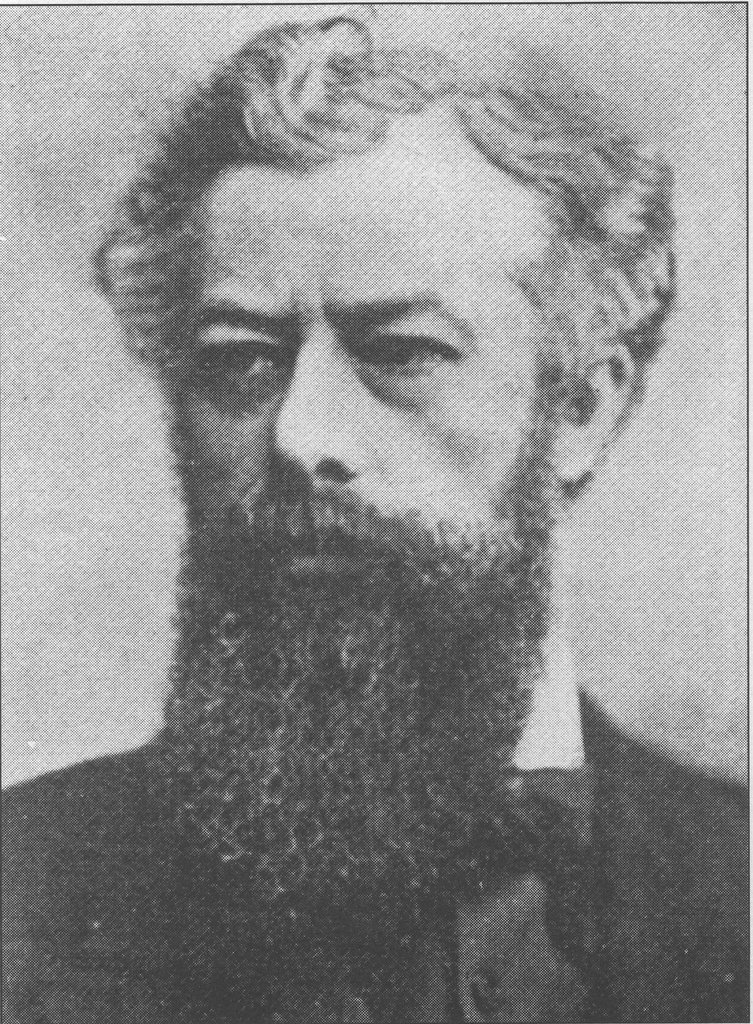
I referred in my previous message to an incident in 1873 when history would repeat itself.
Edward Turney (pictured) was the editor of The Christadelphian Lamp (later renamed The Christian Lamp). In 1873, two years after the death of John Thomas, Edward Turney and Robert Roberts fell out over their understanding of the theological significance of the death of Christ. Roberts, without the ascent of his "managing brethren" or the Birmingham ecclesia (of which he was a member), unilaterally announced in The Christadelphian that he "withdrew fellowship" from Turney and all who held his beliefs. Andrew Wilson in The History of the Christadelphians 1864-1885 commented that:
"By this action, Roberts established a precedent for dealing with doctrinal dissidence ... However, stirring deep in the sensitivities of Roberts's brethren was the impression that this type of action was altogether too summary and abrupt amongst a congregation of brethren. In 1885, many Christadelphians reacted to a repetition of Roberts's conduct of 1873 by forming an entirely new sub-sect, known as the 'Suffolk Street fellowship'."
The fallout for Christadelphians was significant. In 1872 more conversions to Christadelphianism (as baptisms) were recorded in Nottingham as a result of Turney's preaching than in Birmingham where Roberts was based. A similar situation occurred in Essex where all the baptisms prior to 1873 occurred at Maldon as a result of David Handley's preaching. (David Handley [1822-1886] shared similar views with Edward Turney). After 1873 the number of baptisms in Nottingham and Essex dropped off sharply, and the Christadelphian ecclesias in these areas never regained their momentum. Wilson noted that:
"Apart from the Inspiration Controversy, which came to a head in 1885, no other schism appears from official figures to have influenced the Christadelphian movement so much as the 'Clean Flesh' heresy"* (p. 345).
Turney's supporters eventually took the name "the Nazarene fellowship" and, as far as I can tell, no longer call themselves Christadelphians. The Nazarene Circular Letter published by them continues to this day with its main readership, apparently, being among the Christadelphian community, "many of whom quietly support it" according to one of its members. In his Thinking It Over (Birmingham, 1963) Ernest Brady, a previous editor of the Nazarene Circular Letter, noted from his discussions with Christadelphians on a private basis that "a large proportion of Christadelphians" were in agreement with Nazarene views.
I mention this incident in 1873 to demonstrate that a pattern was emerging in the Christadelphian community, with Robert Roberts becoming increasingly authoritarian, and removing prominent brethren who refused to submit to his authority. It began with the disfellowship of the very capable leader George Dowie in 1864, was repeated in 1873 with the ostracism of the successful preachers Edward Turney and David Handley and their supporters, and came to a head with the excommunication of the popular speaker and writer Robert Ashcroft and the 1885 division (more on that later).
The Believers Movement was changing.
* This was the name given by Roberts' supporters to Turney's views on the atonement. Turney and his supporters were sometimes called Renunciationists by Roberts' supporters as they had renounced some of their earlier ideas.
What did Christadelphians set out to be? (4)
Early on in the Believers Movement there was an emphasis on the simplicity of the Gospel, and a resistance to any attempts to define their beliefs in a creed or statement of faith. For example, in 1855 John Thomas published a letter in his magazine from a correspondant referred to only as ‘Mary B.R.’ which included a one-paragraph summary in less than 300 words of her understanding of the Gospel. She expressed a desire to be baptised. John Thomas replied:
This confession did not speak of the mortality of man, the nature of the devil, the relationship between Jesus and the Father, the work of the Holy Spirit, or many other matters considered to be ‘fundamental’ by many later Christadelphians. Yet John Thomas commended it as ‘an intelligent confession’ and adequate for candidacy for baptism.
One of the prominent brethren in the Believers Movement in Scotland was George Dowie (1824-1895), being persuaded of John Thomas's views by March 1853 (a year before the 14 year old Robert Roberts was baptised in Aberdeed, Scotland). Andrew Wilson comments about him that:
 It seems that the Scots ecclesias generally were made up of such independent-minded individuals, and Dowie (pictured) was held in high esteem. He was a close friend of the Roberts family (and his signature is on Robert & Jane Roberts marriage certificate as a witness), but by 1864 they had fallen out.
For some years George Dowie published a magazine called The Messenger of the Churches (from 1858 to 1870) which circulated both in Scotland and England. Dowie published a hymn-book for the Believers in 1864, five years before Roberts produced his Golden Harp. He also wrote and published other literature for the Believers and was regarded as something of a leader, especially among the Scots Believers' churches.
Around this time John Thomas began to publish his views on the Revelation in a 3 volume series called Eureka (volume 1 was published in 1861, volume 2 in 1866 and volume 3 in 1868). Dowie disagreed with much of Thomas's interpretations, and presented an alternative view in his Messenger. Thomas made it clear to Roberts that he wasn't pleased. Relationships between Thomas and Roberts were already "frosty" (and Roberts refers to this in his autobiography). In 1864 Roberts wrote to Dowie saying that he no longer regarded him as a brother, and shortly afterwards there was a thawing in the frost between Thomas and Roberts. Later that year Roberts began publishing his own magazine, The Ambassador (later renamed The Christadelphian).
It would be unreasonable to infer from this incident alone that Roberts disfellowshipped his old friend in order to advance his own position within the Believers Movement (soon after to be renamed Christadelphians), were it not for the fact that history was to repeat itself with the disfellowship of another prominent brother, Edward Turney, in 1873 and the popular and charismatic Robert Ashcroft in 1884. (I will write further about these incidents in subsequent messages).
What is noteworthy about the disfellowship of Dowie is that it actually had nothing to do with his interpretion of Revelation - the reason for Thomas's displeasure. In an article published in April 1864 Dowie alluded to a belief in a personal devil. This gave Roberts the excuse he needed to be rid of Dowie and to regain Thomas's approval. A fellow Scot, James Cameron, pointed out that Roberts used the 'personal devil' matter as a sudden and opportunist ground for disfellowship. Until that point this had not been a cause of disfellowship and Roberts own brother-in-law pointed out his inconsistency in that another person known to Roberts was not disfellowshipped even though they held identical views to Dowie regarding the devil.
Several years later when Roberts visited the Aberdeen ecclesia (by this time known as Christadelphians) a confrontation took place and Roberts refused to break bread there because they had not endorsed his judgment in the case of George Dowie. It seems that many were not happy with the new tightening up of doctrinal views, especially when it was largely being controlled by a magazine editor, and not by consensus of the brethren.
An interesting thing about this incident is that it was apparent that not all the Believers held the same views as Thomas and Roberts about the devil, but that they did not regard differences of opinion about this as cause for separating. Another group which grew out of, or parallel with, the Believers Movement is the Church of God General Conference, sometimes called Church of God of the Abrahamic Faith. To this day some Abrahamic Faith individuals and churches hold views similar to Christadelphians on the identity of the devil, while others believe the devil to be a fallen angel. This is not a cause for division and the two views exist happily side-by-side in the same church or denomination. (The Church of God General Conference [COGGC] also resembles the Believers Movement churches more closely than later Christadelphians in that they generally practice open communion rather than closed communion)*.
Incidentally, it seems that George Dowie died as a Christadelphian. After the division in 1885 when many ecclesias broke free of Roberts' authoritarianism he joined an ecclesia not under Roberts control.
In summarising what Christadelphians set out to be, my point # 4 is this:
* The COGGC holds many of the same doctrinal distinctives as Christadelphians. For example, they are non-trinitarian, believe in conditional immortality, the second coming, the restoration of Israel, and the kingdom of God on earth.
“Mary’s confession of faith is very intelligible, intelligent, and scriptural, and reveals no reason why water should be forbidden that she should not be baptised”.(Herald of the Kingdom and Age to Come, March, 1855, page 69).
This confession did not speak of the mortality of man, the nature of the devil, the relationship between Jesus and the Father, the work of the Holy Spirit, or many other matters considered to be ‘fundamental’ by many later Christadelphians. Yet John Thomas commended it as ‘an intelligent confession’ and adequate for candidacy for baptism.
One of the prominent brethren in the Believers Movement in Scotland was George Dowie (1824-1895), being persuaded of John Thomas's views by March 1853 (a year before the 14 year old Robert Roberts was baptised in Aberdeed, Scotland). Andrew Wilson comments about him that:
"Dowie wished to preserve the exciting, experimental debatability of issues which had existed for his peers and himself in the period 1848-1864".History of the Christadelphians: 1864-1885, Shalom Publications,1997, p. 325)
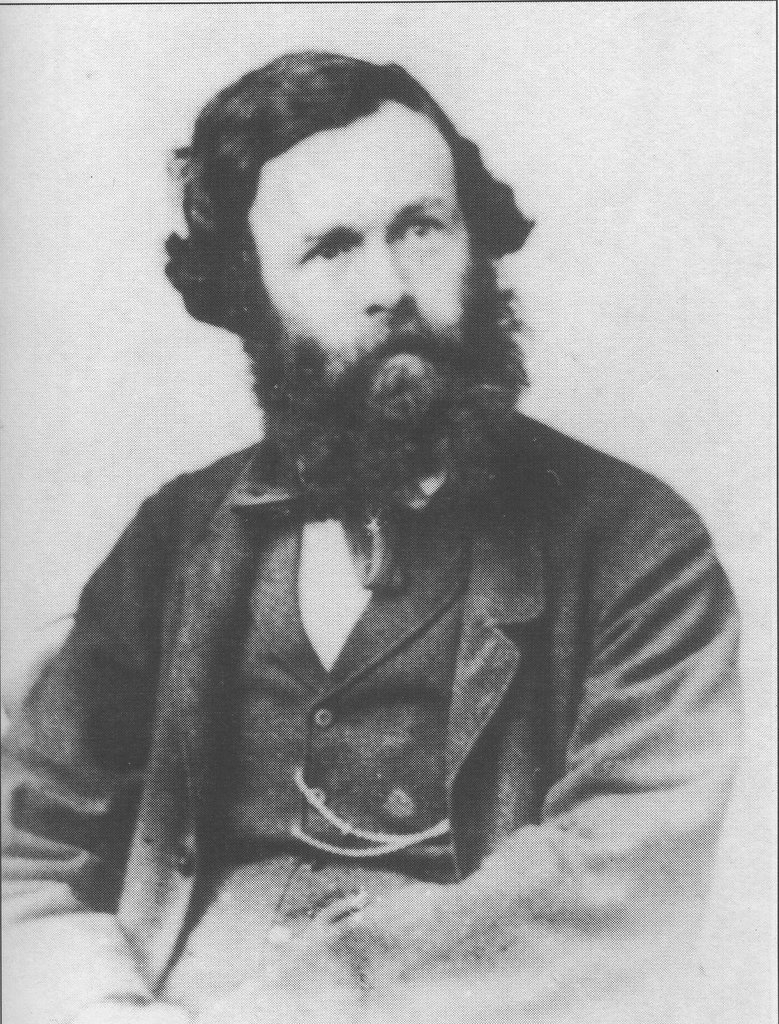 It seems that the Scots ecclesias generally were made up of such independent-minded individuals, and Dowie (pictured) was held in high esteem. He was a close friend of the Roberts family (and his signature is on Robert & Jane Roberts marriage certificate as a witness), but by 1864 they had fallen out.
For some years George Dowie published a magazine called The Messenger of the Churches (from 1858 to 1870) which circulated both in Scotland and England. Dowie published a hymn-book for the Believers in 1864, five years before Roberts produced his Golden Harp. He also wrote and published other literature for the Believers and was regarded as something of a leader, especially among the Scots Believers' churches.
Around this time John Thomas began to publish his views on the Revelation in a 3 volume series called Eureka (volume 1 was published in 1861, volume 2 in 1866 and volume 3 in 1868). Dowie disagreed with much of Thomas's interpretations, and presented an alternative view in his Messenger. Thomas made it clear to Roberts that he wasn't pleased. Relationships between Thomas and Roberts were already "frosty" (and Roberts refers to this in his autobiography). In 1864 Roberts wrote to Dowie saying that he no longer regarded him as a brother, and shortly afterwards there was a thawing in the frost between Thomas and Roberts. Later that year Roberts began publishing his own magazine, The Ambassador (later renamed The Christadelphian).
It would be unreasonable to infer from this incident alone that Roberts disfellowshipped his old friend in order to advance his own position within the Believers Movement (soon after to be renamed Christadelphians), were it not for the fact that history was to repeat itself with the disfellowship of another prominent brother, Edward Turney, in 1873 and the popular and charismatic Robert Ashcroft in 1884. (I will write further about these incidents in subsequent messages).
What is noteworthy about the disfellowship of Dowie is that it actually had nothing to do with his interpretion of Revelation - the reason for Thomas's displeasure. In an article published in April 1864 Dowie alluded to a belief in a personal devil. This gave Roberts the excuse he needed to be rid of Dowie and to regain Thomas's approval. A fellow Scot, James Cameron, pointed out that Roberts used the 'personal devil' matter as a sudden and opportunist ground for disfellowship. Until that point this had not been a cause of disfellowship and Roberts own brother-in-law pointed out his inconsistency in that another person known to Roberts was not disfellowshipped even though they held identical views to Dowie regarding the devil.
Several years later when Roberts visited the Aberdeen ecclesia (by this time known as Christadelphians) a confrontation took place and Roberts refused to break bread there because they had not endorsed his judgment in the case of George Dowie. It seems that many were not happy with the new tightening up of doctrinal views, especially when it was largely being controlled by a magazine editor, and not by consensus of the brethren.
An interesting thing about this incident is that it was apparent that not all the Believers held the same views as Thomas and Roberts about the devil, but that they did not regard differences of opinion about this as cause for separating. Another group which grew out of, or parallel with, the Believers Movement is the Church of God General Conference, sometimes called Church of God of the Abrahamic Faith. To this day some Abrahamic Faith individuals and churches hold views similar to Christadelphians on the identity of the devil, while others believe the devil to be a fallen angel. This is not a cause for division and the two views exist happily side-by-side in the same church or denomination. (The Church of God General Conference [COGGC] also resembles the Believers Movement churches more closely than later Christadelphians in that they generally practice open communion rather than closed communion)*.
Incidentally, it seems that George Dowie died as a Christadelphian. After the division in 1885 when many ecclesias broke free of Roberts' authoritarianism he joined an ecclesia not under Roberts control.
In summarising what Christadelphians set out to be, my point # 4 is this:
Christadelphians set out to have a simple faith and to tolerate diversity of opinions on many matters.
* The COGGC holds many of the same doctrinal distinctives as Christadelphians. For example, they are non-trinitarian, believe in conditional immortality, the second coming, the restoration of Israel, and the kingdom of God on earth.
Subscribe to:
Posts (Atom)
