Friday, February 17, 2006

The Night He Was Betrayed

Just as some 'background' to the posts on the Last Supper here is an article which I wrote several years ago and which was published in The Christadelphian (August 1987, p 284).


“THE NIGHT HE WAS BETRAYED”


The purpose of this article is to draw together the threads which run through the Gospels in relation to the betrayal of Jesus; to link together some apparently unrelated happenings and to piece together the details of the plot to kill Jesus. We shall examine Judas’ motives and the attitudes of the other disciples and Jesus himself, to him. We hope to solve some of the puzzles which surround this fateful night and will see why it will always be remembered as “the night he was betrayed” (1 Cor. 11: 23).

What Motivated Judas to Betray Jesus?

Judas’ disillusionment may have begun about twelve months before this final, fateful Passover. Following the feeding of the 5,000 the people tried to make Jesus their king and the Twelve had probably joined forces with the crowd, or possibly even led them, in their zeal to see Jesus enthroned in his rightful place as the Son of David and Messiah of Israel. This is made plain enough by the fact that Jesus “constrained” his disciples to leave the scene while he dismissed the crowd (Matt 14:22, A.V., cp. John 6:15); the Twelve were apparently a hindrance to him and, for the time being, he was better off with them well out of the way. The next day some of the same crowd came to hear Jesus teach in the synagogue at Capernaum, but they found his teachings either incomprehensible or unacceptable and “many of his disciples turned back and no longer followed him” (John 6:60, 66). Aware that the Twelve had been sympathetic with the Messianic expectations of the crowd, Jesus asked if they too wanted to leave and singled out Judas for special mention: “Have I not chosen you, the Twelve? Yet one of you is a devil! (He meant Judas who later was to betray him)” (John 6: 67-71). Why this special reference at this time to Judas? Had he been a ringleader in the attempt to make Jesus a king, or did he too wish to leave with the others who were disillusioned?

But disillusionment alone was not enough to cause Judas to betray Jesus. Pride had to be combined with it. This happened at Bethany when again Judas was the ringleader or spokesman for the Twelve in objecting to Mary’s waste of very expensive perfume, and was then himself rebuked for failing to understand that it was “a beautiful thing” which she had done (Matt. 26: 6-13; cp. John 12:1-8). Matthew records this incident between the plot by the chief priests to kill Jesus and Judas’ visit to them, and Mark also records Judas’ offer to betray Jesus immediately after the Bethany incident. This was not simply to get the chronology right but because the Bethany incident was central to the betrayal. Luke’s version, when compared with the other synoptic writers, confirms this:


* The chief priests plot to kill Jesus.

* The anointing at Bethany

* Judas goes to the chief priests.

Matthew 26:1-16


* The anointing at Bethany

* Judas goes to the chief priests.

Mark 14:1-10


* The chief priests plot to kill Jesus.

* Satan enters Judas.

* Judas goes to the chief priests.

Luke 22:1-6


Luke’s mention of Satan, in the light of this comparison, seems to be referring somehow to the Bethany incident. It could mean that it was at this particular time that Judas completely surrendered to his human nature and was angered by his humiliation to the extent of wanting to seek vengeance.

John gives us another motive: Judas was a thief and helped himself to their common purse (John 12:6). Certainly this was a reason for his objection to this waste of expensive perfume. Although none of the Gospel writers actually give Judas’ avarice as a reason for the betrayal, it is possible that Paul had it in mind when he wrote: “The love of money is a root of all kinds of evil. Some people, eager for money, have wandered from the faith and pierced themselves with many griefs” (1 Tim. 6:10). Admittedly, 30 silver coins was not an enormous sum (about four months’ wages for a labourer) (1) , but Mark’s and Luke’s accounts that the chief priests “promised to give him money”, when compared with Matthew’s record that they “counted out for him 30 silver coins”, could easily imply that they paid him a deposit with more to follow when the prisoner was secured.

The Conspiracy with the Sanhedrin

The chief priests and elders “plotted to arrest Jesus in some cunning way and kill him” (Matt. 26:4). Before Jesus arrived in Jerusalem for the Passover they “had given orders that if anyone found out where Jesus was, he should report it so that they might arrest him” (John 11:57). However, they made one stipulation: “But not during the Feast, or thee may be a riot among the people” (Matt. 26:5). Luke adds that “they were afraid of the people” (Luke 22:2). There was another reason why they wanted to avoid crowds. On three earlier occasions attempts had been made to kill Jesus and he had escaped (Luke 4:16-30; John 8:59; 10:22-39). On the two later occasions, both in the temple, Jesus’ escape was made possible by slipping through the crowds. Here was how Judas could help: “He watched for an opportunity to hand Jesus over to them when no crowd was present” (Luke 22:6).

The chief priests had made one restriction only - “not during the Feast” - and yet, on Judas’ advice, they set aside this one requirement. As it turned out, Judas was to obtain information of such importance that they would arrest Jesus at what had been earlier considered to be the worst possible time. To discover what this information was, we need to look at what transpired in the upper room.

The Upper Room

Soon after Jesus and the Twelve entered the upper room a dispute arose among the disciples “as to which of them was considered to be the greatest” (Luke 22:24). It was not the first time; a similar dispute had erupted a few days earlier over who would sit on Jesus’ left and right hands in his glory (Matt. 20:20-28; Mark 10:35-45). The dispute may have re-erupted over the same issue, this time prompted by the seating arrangements. It is apparent that John was on Jesus’ right (John 13:23-25) and Judas most likely was on his left. This is indicated by the fact that Judas was in close proximity to Jesus and their conversation was unheard by the others (2). These two disciples detected something about Jesus’ state of mind that night. While all four Gospel writers record Jesus’ prediction, “One of you will betray me”, John alone notes that while Jesus said this he was “troubled in spirit” (John 13:21). Judas also noticed this troubled disposition, and was later to find his knowledge useful.

The reaction of the others to Jesus’ prediction is remarkable. First “they looked on one another doubting of whom he spake” (John 13:22); secondly, “they began to question among themselves which of them it was” (Luke 22:23); and finally, “they began to be sorrowful and to say ‘Is it I?’ “ (Mark 14:19). They looked to themselves and focused on their own doubts and failings, rather than the faults of others. They may have thought that Jesus was referring to their earlier dispute as a kind of betrayal, a denial of his teaching and spirit. Paul no doubt alludes to their introspection when, in the context of the breaking of bread, he says “Let a man examine himself” (1 Cor. 11:28).

Peter asked John to find out from the Lord who would betray him. We hear nothing of Peter following up this request and asking John who it was who had been identified. Could it be that Jesus’ prediction of Peter’s denials had been understood by that apostle to be the answer to his question? Had his worst fears (“Is it I?”) been confirmed?

Judas’ Rendezvous with the Chief Priests

Jesus told John that he would identify the betrayer by giving him a piece of bread which he had dipped in the dish. He gave it to Judas. “As soon as Judas took the bread, Satan entered into him” (John 13:27). Had Judas heard what Jesus had said to John and was he now humiliated again by being identified in this way? If so, then his anger would have been rekindled and inflamed and Judas again surrendered to his human feelings.

He quickly left the room and went to the chief priests with some important information. “Jesus is in an unusual state of mind; he is ‘troubled in spirit’ and speaking of being betrayed; this would be the psychologically right moment to arrest Jesus because he would not resist or try to escape”. Such an approach by Judas seems to be indicated in Psalm 41 which is partially cited in John 13;18: “All my enemies whisper together against me; they imagine the worst for me, saying, ‘A vile disease has beset him; he will never get up from the place where he lies’. Even my close friend, whom I trusted, he who shared my bread, has lifted up his heel against me” (Psa. 41: 8-9).

Psalm 55 was written in the same historical context as Psalm 41: the rebellion of Absolom and Ahithophel’s betrayal of David. No doubt it equally applies to Judas’ betrayal of Jesus. “If an enemy were insulting me, I could endure it; if a foe were raising himself against me, I could hide from him. But it is you, a man like myself, my companion, my close friend, with whom I once enjoyed sweet fellowship as we walked with the throng at the house of God” (Psa. 55: 12-14). Was there any special way in which Jesus and Judas were “close friends” enjoying “sweet fellowship in the house of God”? It seems highly likely that Judas was the only Judaean among the Twelve (Iscariot is probably derived from Ish Kerioth - a man of Kerioth in Judaea) and therefore the only disciple likely to have had a formal religious education. This may have given him a good knowledge of Scripture, enabling him to discuss Scripture with Jesus on a different level to the others and therefore enjoying a special relationship. The expressions, “a man like myself, my companion, my close friend whom I trusted” certainly imply a special relationship, the last expression possibly referring to his office as treasurer, the only special office, as far the we are aware, to be held by any of the Twelve. Judas’ position on Jesus’ left at the last supper was probably a token of this relationship, as John’s position on Jesus’ right was because he was “the disciple he loved”. Judas was probably above suspicion as far as the other disciples were concerned; it certainly appears that they were blissfully unaware of his dealings with the common purse.

It is almost certain that it was this “vile disease”, this unusual depression or troubled spirit, which Judas used to persuade the chief priests to set aside their one stipulation that Jesus was not to be arrested during the Feast. They acted quickly and sent a delegation to Pilate to arrange a contingent of soldiers and a high-ranking Roman official to escort them to the place where Jesus was to be arrested (3). No doubt Pilate was also notified to expect a trial first thing the following morning before Jesus’ supporters could rally to his defence (4).

Gethsemane

In the meantime Jesus and the Eleven had left the upper room and gone to Gethsemane. Jesus’ troubled state of mind had become more intense, so that he would say, “My soul is exceeding sorrowful” (Matt. 26:38). He “offered up prayers and petitions, with loud cries and tears to the one who could save him from death” (Heb. 5:7).

“The Father heard; an angel there
Sustain’d the Son of God in prayer.”

Jesus’ prayer was heard and he was strengthened by an angel so that he could pray more earnestly (Luke 22: 43-44). As the Apostle records: “He endured for the joy that was set before him” (Heb. 12:2).

It was soon after this that Judas arrived with the Roman soldiers and members of the Sanhedrin. He had a pre-arranged signal for them: “The one I kiss is the man.” Why was such a signal necessary? Could not Judas simply point out the man to them? He must have wanted to avoid any appearance of complicity in the arrest so that he could retain his place among the Twelve - apparently believing that things were not over and that Jesus would simply be punished and released and no-one would know of his involvement. This signal would arouse no suspicion, being the usual greeting between a Rabbi and his disciple. The soldiers must have been instructed to observe from a distance and wait for a suitable time before coming out of the darkness (5). Judas was overly keen to give the impression that all was well. The Greek word used in the Gospels (kataphilein) means ‘to kiss tenderly or repeatedly, as one would a lover’. He would then have mingled with the other disciples who would be unaware that anything was wrong. By the time the soldiers came forward to arrest Jesus, Judas had made sure that his tracks had been covered. There is still one more clue leading to this conclusion.

At the High Priest’s House

John tells us that Peter and an unnamed disciple who was known to the High Priest followed Jesus to the house of Annas. It has often been assumed that this anonymous disciple was John himself, although the evidence for this is wanting. Why was John known to the High Priest? Why was not John’s Galilean accent noticed, as Peter’s was (Luke 22:59)? There was only one disciple whom we know for certain was known to the High Priest, and who had no Galilean accent - Judas! Judas had covered his tracks so well that Peter was still unaware of his involvement in Jesus’ arrest, and so the two of them followed Jesus to the High Priest’s house together. We do know for certain that Judas was there because he was present when the Sanhedrin came to its verdict and he saw Jesus condemned (Matt. 27:1-3).

Judas’ Remorse

Why was Judas suddenly “seized with remorse”? (Matt. 27:3). Events must have turned out very differently from what he anticipated. He could not have expected Jesus to be condemned to death; perhaps he only expected a flogging or similar treatment and his desire for vengeance because of his humiliation would have been satisified.

Judas had seen Jesus’ trial through to the end. He had started, with Peter, at the house of Annas. It was as Jesus was being led from Annas to the house of Caiaphas that he looked on Peter, who had in the meantime denied knowing him, and Peter ran from the scene in tears (Luke 22:61-62). Judas, however, followed as Jesus was interrogated by the Sanhedrin at Caiaphas’ house and then taken to the Temple precincts, where the ‘legal’ trial was conducted in the early hours of the morning (6) in the “Chamber of Hewn Stone”. It is likely that Judas was also at this final trial in the Temple precincts because it was into the actual Temple sanctuary itself (7) that Judas flung his thirty silver coins. The strong verb used to describe this act indicates that he did so in angry defiance (8).

Judas may even have felt tricked because the chief priests had not revealed their real intentions to him. Whatever he had hoped to achieve he did not want, nor did he expect, the death of Jesus. He knew Jesus to be underserving of death yet he was now faced with the terrible reality that Jesus was about to die because of him. “I have sinned, for I have betrayed innocent blood.” Judas, like Cain, felt that his sin was greater than he could be forgiven (Gen. 4:13, R.V. margin) and, like Ahithophel the betrayer of David (2 Sam. 17:23), he went and hanged himself.

Conclusion

We need to remember that from the beginning Jesus viewed Judas as a potential follower and disciple. They shared a closeness and developed a friendship as a result of their mutual interest in the things of God. But Judas was never a committed follower. His highest title for Jesus was “Rabbi” (Matt. 26:25), never “Lord”. He is a continual warning to all those half-hearted disciples who wish to be identified in some way with Jesus, his teachings or his followers, yet can never break free of their attachment to the world or their picture of what Jesus ought to be like. They eventually follow the same path of apostasy and “to their loss they crucify the Son of God afresh” (Heb. 6:6).

We need to realise that Judas’ apostasy was not sudden; it was a long process during which he nurtured his disillusionment and anger at being humiliated. Long before the betrayal he had turned from Jesus and sought satisfaction in wordly gain. His moment of realisation came at last when he discovered that his plans had gone horribly wrong and he had killed the one who had loved him. No one else was to blame; it was by his own choice that he left his apostolic ministry “to go where he belongs” (Acts 1:25).


Endnotes:

1. The stater or tetradrachmon was valued at 4 denarri. As a denarius was worth about a day’s wage (Matt. 20:1-16) Judas’ 30 silver coins would have been roughly equal to 120 days’ wages.

2. John 13:28, cp. Matt. 26:25. The others were not aware that Jesus had identified the betrayer to both John and Judas.

3. Gk. speira (John 18:3) is a technical term for a cohort of Roman soldiers and would not be used to describe Temple Police. Gk. chiliarch (John 18:12) is a military tribune, probably the commander of the Antonia fortress. The detachment of soldiers was large enough to warrant his presence at Jesus’ arrest.

4. John 18:29-34 indicates that the Sanhedrin had been so confident that Pilate would ratify their decision that they initially came without formally prepared charges. This implies that they had discussed the case with him the previous night and therefore did not expect formal charges to be required. Luke 23:1-2 pictures a scene of Jesus’ accusers hurriedly thinking up charges to satisfy Pilate. This provides the most likely explanation for the dreams had by Pilate’s wife (Matt. 27:19). She would have overheard the discussion late the previous night and her conscience had caused her to dream about the conspiracy to condemn “this righteous man”.

5. This is probably what is meant by the words, “Then the men stepped forward” (Matt. 26:50).

6. Matt 27:1 and Mark 15:1 record a trial “very early in the morning” when the Sanhedrin reached a decision. Luke records this trial fully (22:66; 23:1) saying that it was “at daybreak”. This was because the interrogation by the Sanhedrin during the night could not legally be called a trial.

7. Matt. 27:5. It was into the Naos, the actual Temple, rather than the Hieron, the Temple precincts, that Judas threw the money. He probably stood at the barrier between the Court of the Israelites and the Court of the Priests and threw the money across it into the Court of the Priests

8. Gk. rhipto has this meaning, according to R.V.G. Tasker in the Tyndale Commentary on Matthew.

Thursday, February 16, 2006

The Lord's table (9) - the Last Supper (continued)

I've been asked to write some more material on the theme of our Lord's table fellowship practices, especially in relation to the 'Last Supper'.

I plan to write something on 3 things in particular:

1. Who was at the last supper? It's important to answer this question because some people claim that the intimacy of the occasion, the limited number (our Lord and 12 'guests'), and the secrecy surrounding the preparation of the meal indicate that when it comes to celebrating communion our Lord set an example of exclusivism (which should consequently be imitated by the church, so the argument goes). This flies in the face of Jesus' pattern of inclusivism, so the question of who was there is important.

2. The Last Supper and the sacraments. Did Jesus intend that bread and wine should be used as sacraments? What was the reason for using these two 'emblems' and how should the church observe communion today?

3. This was obviously no ordinary meal. So what was so special about it, why was it different, and how, and what are we meant to learn from it?

I'm going to be very busy next week so I will try to post as much as I can beforehand. My apologies in advance if I don't get to write much. I also haven't forgotten the other series I've started but not yet finished. It will all come together, eventually, by God's grace.

Tuesday, February 14, 2006

Christadelphian authoritarianism today

I gave some examples in recent posts of the trend towards authoritarianism in the Christadelphian movement. However, these weren't isolated events in history - there is strong evidence of authoritarianism in some parts of Christadelphianism today.

Here is just one example. The Adelaide Suburban Young People recently sent a letter to their member ecclesias emphasising the need to ensure their young people "conform" (their word) to certain dress standards which they will "enforce at the door" (their expression). Their letter is below, with my emphasis.


Suburban Young Peoples’ Activities

16 January 2006

To the Recorders of the Adelaide Suburban, Glenlock, Mildura, Murray Bridge and Victor Harbor Ecclesias, and the IEAC.

Dear Brethren,
Loving greetings.

Over many years the Suburban Young Peoples Activities have become a valuable part of our Ecclesial life for young people. This facility provides a balance of activities to cater for their social and spiritual needs in a world that can give them nothing of lasting value. These activities draw together young people from a whole range of social and ecclesial circles, and yet united in a course of life, which can develop within them an appreciation for the ways of God. The worth of these activities in developing and promoting the spirit of the Truth in the Ecclesial environment both now and into the future is inestimable.

Amongst the young people, we have a wide variation of opinions on standards in relation to dress and attitude. Attention needs to be given to ensure our young people understand and conform to the accepted inter-ecclesial standards. This is nothing new and is something that has been constantly addressed in order to maintain a wholesome atmosphere in all that is done. Human nature is very persistent in attempting to promote “individual” standards based on current trends and not to conform to an agreed higher standard. It is essential to understand that the Suburban Young People’s environment is not the arena where these values are meant to be taught. They must be taught and promoted in the home environment, and supported by the Ecclesia so that they are naturally expected within the scope of the Suburban Young People’s activities. The wholesome atmosphere we have long enjoyed does not just happen, it has to be cultivated. Sadly non-compliance is often an issue and the work of hosting becomes exceedingly difficult when confronted by rebellion and the denial of respect for the rules and standards we ask our young people to respect.

We are seeking the renewed support of all Ecclesias who have young people from their meeting attending the Suburban Young People’s activities. Every young person and their parents should be aware of what is expected before they participate in these activities. The booklet “The Things We Stand For” plainly outlines the acceptable standards for young people’s activities. These booklets, along with introductory letters to each young person when they first attend and their parents should be considered and understood so that areas of non-conformance are minimised at all activities. Attendance at Suburban Young People’s functions is open to any young person fifteen years of age and is conditional on adhering to these standards. Please be aware that they must have already turned fifteen to be eligible for attendance.

There are a growing number of young people attending from Ecclesias which have not traditionally been associated with our Suburban Young People’s activities. They are most welcome to join us but are subject to the same rules and standards as everyone else. Young people involved with them should make them aware of the accepted standards before leaving home as we prefer not to have to deal with these issues at our first point of welcome.

There are currently a number of things that need to be addressed so that we can continue with a clear understanding of our position on dress and behaviour.

• There is a growing trend towards sloppiness in dress. The booklet “The Things We Stand For” clearly outlines what is required. For classes formal wear comparable to that of a Sunday morning meeting.
With particular reference to the boys, a collar and tie is expected to be worn. Jeans and sneakers are not classified as formal wear and should not be worn at study classes. Shirts must be of a suitable style to enable them to be tucked in as untucked shirts are unacceptable.
For the girls, modest dress is required. Interpretation here is always a problem but common sense needs to be used. Obvious immodest dress is unacceptable and anything that is borderline should be avoided. The hosts’ decision on an individual basis is final and must be respected. Remember that the style of dress should also be formal, not sloppy or provocative.
• Head coverings are required to be worn by all girls, whether baptised or not. It seems the wonderful principle of the head covering is largely misunderstood. We will address the principle with the young people separately but please be aware that it is a standard which is not negotiable.
• It is our intention to enforce matters of dress at the door. There would be no problem if young people all adhere to the simple requirements. There can be no real excuse for non-conformity. There may be parents that are unsupportive of our position on these matters but the accepted standards are not negotiable. Please put in the effort as it is not our desire to make a show of any young person. If they fail to wear a tie or head-covering, the hosts will provide one for them. There is no satisfactory excuse.
• Attendance at study classes is for the primary purpose of scriptural learning. Everyone attending must do so on the basis of respecting the purpose of this activity. We are finding that some are distracting others or disrupting the proceedings with childish behaviour. Disinterest in the meeting should not be displayed. This can result in a number of things such as foolish behaviour during hymns and prayers, frequent toilet breaks, constant talking throughout the meeting, notes back and forth, SMS messaging to others in the meeting, laughter or other forms of distraction. Sadly It is often evident amongst the same minority group each meeting.
• The Study class meetings start at the set time of 7:30 pm but many see no need to make the effort to arrive on time. Some even arriving half an hour late. This on its own is a distraction as seating is sought for the late comers. Parents need to ensure their young people leave home with adequate time to arrive well before the start time. This will help to set the proper sense of decorum of the meeting.

The hosts have been appointed to oversee these activities for the good of the whole group. We enjoy the role we play, and it is a very positive work as we watch young men and women develop within the activities of the Truth. We understand the many trials and experiences our young people face in a world that is so determined to defile their conscience and destroy the Godly principles. At times, some of this influence can become evident in their behaviour. The responsibility of the hosts is to make decisions to maintain an appropriate level of decorum.

If disciplinary action is required, the decisions of the hosts must be respected by the young people, and supported by their parents and their ecclesias. In the first instance the matter will be discussed with the young person. If this cannot be resolved, then the issue will be raised with their parents. If no improvement in the situation is evident, the matter will be referred to their home Ecclesia and the young person instructed not to attend any Suburban Young Peoples’ activities until the matters are resolved to the satisfaction of the President. This may also include referring the matter to the IEAC for direction. We would hope that such measures would never be necessary, but if the course of action is known, there can be no surprises or excuses.

As a whole, we have a wonderful group of young people. In all that we do, we seek to glorify our Heavenly Father. To that end we would seek your earnest support to maintain the spirit which strives to imitate the example of our Lord, who served his Father in the spirit of holiness with a zeal and passion in self denial.

Could you please distribute this information amongst your ecclesia so that all parents and young people understand the seriousness of the matters we have raised. Additional copies of the booklet “The Things We Stand For” are available on request.


On behalf of the Adelaide Suburban Young People
Bro Rob Scott (President)


It's made clear that the young people will not be permitted to think for themselves, and that even their parents opinions will not be taken into consideration. The role of parents has been taken over by the authorities in the youth group. "There may be parents that are unsupportive of our position on these matters but the accepted standards are not negotiable." The rules have been made and will be enforced. Even visitors from unaffiliated ecclesias will be "subject to the same rules."

No wonder that their young people are restless and inattentive in the classes when those in control are demanding adherence to "rules" rather than providing a message which is stimulating, relevant and life-changing.

Thursday, February 09, 2006

What did Christadelphians set out to be? (9)

There were three main consequences of the events of 1864, 1873 and 1885 which were to have a lasting influence in Christadelphianism and change the direction of the movement. In the last two posts on this thread I looked at two of these consequences:

  • There was a shift from the openness to change, from the exciting and lively debate, and the tolerance of the early years, towards a rigid dogmatism.
  • As Christadelphians became less tolerant of alternative views there was a shift from diversity to division.
In this post I want to look at the third consequence:


3. With increasing organisation came an increase in authoritarianism.

One of the key factors in the growth of the Believers Movement and then Christadelphiansim was the development of some organisation. The Believers Movement was a lose alliance of churches and house meetings which shared a common understanding of many aspects of the Gospel, but were all autonomous and independant. While they worked together on many projects and exchanged speakers and magazines freely, independance can sometimes be a barrier to organisation. Robert Roberts appears to have been gifted in this area and Andrew Wilson noted that:
"The organising ability of Robert Roberts was very important: he gave the movement its rules, institutions, and much of its literature" (page 399).
However, the "rules, institutions and ... literature" proved to be a two-edged sword. Wilson also noted that:

"Roberts was held in high esteem by his brethren for his vigour; his application to ecclesial arrangements in Birmingham was immediate upon his arrival and energetic; simultaneously, he was engaged in controversy with the Aberdeen Campbellites [Churches of Christ]. Nevertheless, Roberts's efficiency and zeal appeared, in the eyes of some, to have an impetuous aspect to it; in 1864, he wrote of his 'strained relations with Dr. Thomas'; on other occasions, members of his family expressed reservations about his temperament."


As an example of of the last point, Wilson quotes from Roberts' own brother-in-law W. Norrie in his Early History of the Gospel of the Kingdom of God in Great Britain (Edinburgh 1904-1906). Referring to a John Wilson of Halifax and his falling out with Robert Roberts Norrie wrote:

“[he] was one of many brethren who were victimised because of their ‘disagreement in important principles’ with R. Roberts. In the particular ‘principle’ in which the two differed, I was convinced that Roberts was in the right, but I was equally confident that this disagreement did not warrant the cruel treatment to which he [John Wilson] was subjected on that account”.
The way in which Roberts disfellowshipped Dowie, Turney and Ashcroft and turned "Bro. Dealtry" into "Mr. Dealtry", and especially the way he took this action without the approval of his ecclesia, shows that Roberts was becoming an authoritarian. He didn't need to consult anyone - after all, he was the editor of The Christadelphian! (and he'd gotten rid of his competitors who edited The Messenger of the Churches, the Christadelphian Lamp, and other magazines).

Even John Thomas changed from being what Wilson described as an 'anarchist':

"To describe John Thomas as a spiritual anarchist would not do full justice to the profundity of his radicalism" (page 93).

He described John Thomas as "a pioneer, a discoverer ... What appealed to him was to wriggle free of what he considered the mental shackles imposed by orthodoxy, so he could soar high in the spiritual etherea and see vistas, within the Bible, of God's past, present and future plans”. He was opposed to hierarchies, rules, constitutions, creeds and statements of faith and believed that a minimum of organisation was preferable.

Yet, Wilson notes that "during the period approximately 1864 to his death in 1871, Thomas's views on ecclesiastical polity became rather more authoritarian than they had previously been".

It was to be on this point of authoritarianism that the Christadelphian denomination was eventually to explode in 1885.

However, this is not just a history lesson. Christadelphianism changed and left later generations of Believers with this legacy:


  1. There was a shift from the openness to change, from the exciting and lively debate, and the tolerance of the early years, towards a rigid dogmatism.
  2. As Christadelphians became less tolerant of alternative views there was a shift from diversity to division.
  3. With increasing organisation came an increase in authoritarianism.


I will take this up later and look at what can be done to get the Believers Movement back on track.

Monday, February 06, 2006

What did Christadelphians set out to be? (8)

The events of 1864, 1873 and 1885 changed the direction of the movement. I have already looked at one of the consequences of these events which were to have a lasting influence in Christadelphianism:

  • There was a shift from the openness to change, from the exciting and lively debate, and the tolerance of the early years, towards a rigid dogmatism.
There were two more major consequences, which I will look at over the next two posts in this thread.

2. As Christadelphians became less tolerant of alternative views there was a shift from diversity to division.

Between 1864 and 1885 there were at least 6 divisions within the Christadelphian denomination, including the major divisions caused by the disfellowships of George Dowie in 1864, Edward Turney in 1873 and Robert Ashcroft in 1885. Other 'minor' divisions (although not minor for the individuals involved) included the following.

  1. Charles Dealtry, who had been baptised by John Thomas, actively preached the Christadelphian faith between 1866 and 1868 and converted many people to Christadelphianism, especially in Whitby. He was denounced in 1868 for teaching that Jesus was the son of Joseph (although he was never disfellowshipped by any ecclesia). Roberts reported in The Ambassador that the converts made by "Mr. Dealtry" (he was no longer called "Bro Dealtry") in Whitby were to be "re-immersed and organized as a Christadelphian ecclesia".
  2. An unnamed ecclesia in 1876 was challenged by Roberts for teaching a doctrine he called "No Willism". It emphasised the divinity of Jesus and included the idea that Jesus pre-existed as Jehovah of the Old Testament, and therefore could have no other will than that of God Himself. Roberts responded by emphasising the humanity of Jesus in a series of articles and by 1877 it was thought that "No Willism" had been stamped out.
  3. Soon after a pamphlet was published by John Birkenhead entitled Letters on the Doctrine of God manifestation, and Extracts from the Most Recent and Advanced Writings of the Late JOHN THOMAS, M.D. It's clear that Thomas's Christology emphasised the divinity of Jesus to a greater extent than Roberts did, especially in his response to 'No Willism' which emphasised (or over-emphasised) the humanity of Jesus. Roberts responded to the pamphlet by querying whether Christ, as the manifestation of God, had a will of his own. He was clearly trying to link Birkenhead's ideas with the "No Willism" heresy he had endeavoured to stamp out. It's unknown how many people were affected, but Andrew Wilson commented that while the numbers were likely to be small "the amount of disturbance caused ... was substantial".
After 1885 the process of fragmentation continued, with another major division in 1894 (Resurrectional Responsibility).

Writing of the Christadelphian ‘proclivity for schism' in this period sociologist Bryan Wilson refers to a

"series of bitter schisms. Excommunication of members and of one ecclesia by another became a common pattern in the attempt to maintain purity of doctrine and association. Whilst undoubtedly some schisms were at least partly a consequence of struggles for informal influence between leading brethren, there was always a strong concern for obedience to the word of God which led to over-scrupulousness, to purging evil men who arose in the fellowship, and hence to divisiveness."

Bryan Wilson, Religious Sects a sociological study, World University Library, London, 1970, p 109.
In his Religion in Secular Society (C.A. Watts & Co, London, 1966, pp 211-212) Bryan Wilson writes of sects which

"have changed ... in a way rather less influenced by the immediate environment, and rather more in accordance with essentially internal pressures. Thus some revolutionist sects have tended over time...to become more preoccupied with the means of their own insulation from the wider society. They have tended to become more concerned with the condition of their own society, with their own inner holiness. Sometimes ... they have developed the proclivity for schism within, often over matters which to the outsider seem trivial in the extreme... The Christadelphians have shown marked tendencies in this direction." (My emphasis)

Robert Roberts himself confessed:
"A state of comparative prosperity ten years ago has been succeeded by one of strife, division and obstruction, and unutterable affliction has followed in the wake of ventures and expectations that seemed big with blessing"
(The Christadelphian, 1890.)


Bryan Wilson, in Social Aspects of Religious Sects (London University PhD thesis 1955), calculated on the basis of figures provided by Roberts in The Christadelphian that there were about 6,000 brethren in the 'central' fellowship in 1884, and less than 3,000 the year after. Andrew Wilson provides extensive statistical information to demonstrate the sudden and dramatic departure of a large number of brethren from Christadelphianism. In overall terms the loss was between 35% and 44% of the brethren in the U.K. compared to a national annual increase in population of about 10%.

Bryan Wilson wrote that "Barely a month passed without a division in some ecclesia."

Andrew Wilson summarised this period of schism this way (my emphases in bold):

"In the seventeen years between the formation of Baptised Believers in 1847 until the adopting of the editor's mantle by Robert Roberts in 1864, no divisions occurred within the movement. In the only slightly longer period of twenty-one years from 1864 to 1885 six major rifts disturbed the theological equanimity within Christadelphia, the last, in 1885, leaving the movement bereft of many members and devoid of momentum. There is undoubtedly some connection between these two facts: it is not impossible that the abrasiveness of Roberts's personality contributed to the friction involved, as some contemporary writers maintained. Second, Roberts's method of dealing with problems - on occasion involving the curtailment of exegesis by the imposition of a guillotine on further discussion - allowed these problems to be swept under the theological carpet, by very dint of having merely brushed them aside. Such strategies accounted, in part, for the recurrence, in similar and at times identical form, of problems throughout the history of Christadelphians." (p. 364)

Origins of the name "Christadelphian" (2)

In the "certificate" which John Thomas wrote for Samuel Coffman and "the brethren of Ogle County" (ten males in all) he refers to the Antipas Association of Christadelphians in New York as the publishers of a pamphlet called 'Yahweh Elohim'. He cites this as evidence that a denomination with the name "Christadelphian" was already in existence.

Yet Christadelphian tradition is quite definite that the name "Christadelphian" was born out of necessity due to the need to register a denomination of conscientious objectors during the American Civil War. Something doesn't add up here. Either (a) the name was invented for this purpose, as Roberts implies in his biography of John Thomas, and which has formed part of the Christadelphian tradition ever since, or (b) it was already in use in New York as a denominational title. Both can't be right.

And if the name "Christadelphian" was already in use in New York before the need to register a denomination, then it appears that John Thomas was already planning a new denomination - perhaps to break away from the Believers Movement.

In future messages, as I've already promised, I plan to look at some of the influences on the development of the Believers Movement up to this point in 1864, and what may have been in John Thomas's mind when he was planning a new denomination.


The full text of the "certificate" follows, for interest. There are some interesting expressions which give us a glimpse of how John Thomas saw himself within the "denomination". For example:
  • He refers to New York (where he lived at the time) as "the Radiating Centre" of the denomination.
  • He describes himself as "the personal instrumentality by which the Christian Association aforesaid in Britain and America have been developed within the last fifteen years", apparently taking sole credit for the development of the Believers Movement. But in future messages we will examine whether this is correct.

“This is to certify that S. W. Coffman and others (The names of the ten male members were given) constitute a Religious Association denominated herein, for the sake of distinguishing them from all other ‘Names and Denominations,’ Brethren in Christ, or, in one word, Christadelphians, and that said brethren are in fellowship with similar associations in England, Scotland, the British Provinces, New York and other cities of the North and South—New York being for the time present the Radiating Centre of their testimony to the people of the current age and generation of the world.”

“This is also to certify, that the Denomination constituted of the associations or ecclesias of this name conscientiously opposes, and earnestly protests against ‘Brethren in Christ’ having anything to do with politics in wordy strife, or armsbearing in the service of the Sin-powers of the world under any conceivable circumstances or conditions whatever; regarding it as a course of conduct disloyal to the Deity in Christ, their Lord and King, and perilous to their eternal welfare.”

“This being individually and collectively the conscientious conviction of all true Christadelphians, they claim and demand the rights and privileges so considerately accorded by the Congress of the United States in the statute made and provided for the exemption of members of a Denomination conscientiously opposed to bearing arms in the service of any human government.”

“This is also further to certify that the undersigned is the personal instrumentality by which the Christian Association aforesaid in Britain and America have been developed within the last fifteen years, and that therefore he knows assuredly that a conscientious, determined and uncompromising opposition to serving in the armies of ‘the Powers that be’ is their denominational characteristic. In confirmation of this, he appeals to the definition in respect to war on page 13 of a pamphlet entitled ‘Yahweh Elohim’ issued by the Antipas Association of Christadelphians assembling at 24 Cooper Institute, New York, and with which he ordinarily convenes. Advocates of war and desolation are not in fellowship with them, or with the undersigned,
John Thomas.”

Saturday, February 04, 2006

Origins of the name "Christadelphian"

In my last message I mentioned that I planned to post something about the registration of the name "Christadelphian" as a denominational name. Coincidentally, a short time later I came across the following comment in an article about the history of Christadelphians:

"Prior to 1861 and the American Civil War, Christadelphians were known simply as the "Brothers or sisters in Christ". However, with the outbreak of War in North America, believers had to register as Conscientious Objectors. The American authorities would not accept the term "Brothers or sisters in Christ" as it was too general, thus the word "Christadelphian" was coined by John Thomas, encapsulating the two Greek words which mean "Brothers and sisters in Christ"."

There is nothing very remarkable about this comment - I've seen similar comments dozens of times before - except that there is absolutely no historical evidence for it. It's possible that it's a Christadelphian "urban myth".

To date I have been unable to find any substantiating evidence for these statements:

(a) Prior to 1861 and the American Civil War, Christadelphians were known simply as the "Brothers or sisters in Christ".

(b) However, with the outbreak of War in North America, believers had to register as Conscientious Objectors

(c) The American authorities would not accept the term "Brothers or sisters in Christ" as it was too general ...

The information I have is this:

(a) The churches which were later to be called Christadelphian initially resisted a denominational name. Throughout the USA and Britain these churches generally went by the names of Believers, Baptised Believers, the Royal Association of Believers, Baptised Believers in the Kingdom of God, and other similar names. They generally referred to each other simply as "believers". I'm unaware of any documentary evidence that they regularly called themselves "Brothers or sisters in Christ".

(b) It was at the home of Jacob Coffman in Illinois that John Thomas, Jacob and Samuel Coffman met to form the new denomination, Christadelphians, during the final years of the Civil War. This was done, apparently, to protect the members from military duty.

There are no records in Ogle county which bear witness to the outcome of this meeting. Nothing is recorded at the county courthouse, although there are dozens of transactions by the Coffmans regarding their real estate transactions, and dozens more recordings by other denominations to register their trustees and board members in order to conduct church business.

If John Thomas did not register Christadelphians as a new denomination within the county, he may have registered it through the war department. If this is so, the records have not been located to document it, although historical researchers have searched for them.

What benefit was there in registering Christadelphians as a denomination during the Civil War? There was no exemption given to clergy in the Union states. The Union’s Militia Act of 1862 did not provide exemption for clergy or conscientious objectors. The only way a man could avoid the military was to pay $300 and hire a substitute. In an interview with the great great grandson of Sam Coffman, Mr. Ralph Coffman confirmed that Samuel W. Coffman did not serve in the Civil War. However, there are no family records available to determine if he hired a substitute, nor could this be determined via a search of Civil War records*.

Presumably, denominations had to register with the federal government and be recognised as pacifists, and to receive tax-free status. An Income Tax was imposed during the Civil War. Those commonly recognized included Shakers, Quakers, and Mennonites. The historical record does not mention the Christadelphians as a recognised pacifist denomination.

Robert Roberts, in Dr Thomas: His Life and Work, provides details of a "certificate" written by John Thomas for the Coffmans. He writes: "the applicants went before a notary public to affirm the genuineness of his signature, and the truth of the certificate in substance and in fact. The County seal was affixed and the document handed to Brother Coffman for safe keeping until such time as it should be required". However, this was not registration as a denomination.

The Civil War involved two governments. Did John Thomas also register his new denomination in the south? He travelled in the south during the Civil War and it would seem that there would be impetus to register a denomination in the south more than in the Union. However, there is no evidence that he registered the Christadelphians with the Confederate government. The Confederate exemption laws were quite lenient to clergy and conscientious objectors, however, even though they desperately needed the manpower. Due to this, he wouldn’t have needed to register his denomination. In fact, Robert Roberts gave details in Dr Thomas: His Life and Work of an incident where ten brethren were granted exemption from military service in the South on the basis that they were "ministers of religion" (chapter 50). So, where is the evidence that Christadelphians were registered anywhere as conscientious objectors?

(c) As there is no evidence that Christadelphians were registered as a denomination or as conscientious objectors, there is also no evidence that 'The American authorities would not accept the term "Brothers or sisters in Christ" as it was too general'. In fact, there is a denomination in the United States called "Brethren in Christ" and they have been in existence longer than Christadelphians (the Brethren in Christ Church in North America began sometime between 1775 and 1788, near the present town of Marietta in Lancaster County, Pennsylvania). Of Anabaptist origins they are also conscientious objectors. Their website says: "At the time of the Civil War in the United States, the Brethren decided to record themselves under the present name of “Brethren in Christ." So, it appears to be simply untrue that 'The American authorities would not accept the term "Brothers or sisters in Christ" as it was too general'.

There is little doubt that John Thomas coined the name "Christadelphian", and that it happened during the American Civil War for the purposes of having membership in a denomination with conscientious objection to military service. But there is no evidence the name or denomination were ever registered with the authorities, and the story as to why "Christadelphian" was adopted is told by Roberts this way:

To assist them in their endeavour to gain exemption from service, they [the Coffmans] desired the Doctor to write something that they might put in to certify the truth of their claims to have a conscientious objection to military service. This raised a question; how was he to describe them in a way that they should be clearly distinguished from all other claimants? Hitherto there had been no particular name for them; they had been baptised believers; in New York they had adopted the title “The Royal Association of Believers,” but that was obviously unsuitable for the purpose of securing exemption from military service.

“I did not know a better denomination that could be given to such a class of believers (writes the Doctor) than ‘Brethren in Christ.’ This declares their true status, and as officials prefer words to phrases, the same fact is expressed in another form by the word Christadelphians, Christou adelphoi, Christ’s brethren.”
The Coffman's went on their way with a "certificate" written and signed by John Thomas saying they were members of a "denomination" called "Christadelphians" and "they claim and demand the rights and privileges so considerately accorded by the Congress of the United States in the statute made and provided for the exemption of members of a Denomination conscientiously opposed to bearing arms in the service of any human government." Thus the Christadelphian denomination was born and named (but not registered).

"Christadelphian" was adopted because John Thomas supposed that "officials prefer words to phrases", but the story which I've heard a hundred times that "the authorities would not accept the term 'Brothers or sisters in Christ' as it was too general" is simply a myth, as is the story that John Thomas registered his new denomination with the American authorities.

* This information comes from an article by Church of God General Conference historian Jan Stilson: "An Overview of the Leadership and Development of the Age to Come in the United States: 1832-1871" in A Journal for the Radical Reformation Volume 10, No. 1, Fall 2001.

What did Christadelphians set out to be? (7)

To summarise before moving on, early Christadelphianism grew out of the Believers Movement. It wasn't until 1864 that many of these Believers churches began to adopt the new denominational name coined by John Thomas: Christadelphians (I plan to post something later about the registration of this denominational name).

There were a number of things which characterised the Believers movement and early Christadelphians, and which contributed to the growth and success of the movement. So far I have mentioned the following ones:

  1. Christadelphians set out to be people with a spirit of discovery; people who are guided by the Word of God but who reject creeds and statements of faith as having any authority; people who have a pioneering drive and ambition to find the truth for themselves and in allowing the Bible to interpret itself.
  2. Christadelphians set out to have open minds. They set out to study, read, learn and mature in their faith and would change their minds frequently in the process. They set out to be "teachable" and open to new ideas and eager to explore and discuss them.
  3. Christadelphians originally saw their place within the Body of Christ, and sought both to learn and to influence as they grew in grace and knowledge. They recognised and appreciated the valuable contribution of other Christians and would also endeavour to share their own perspectives in the hope that the whole Body of Christ would come to maturity.
  4. Christadelphians set out to have a simple faith and to tolerate diversity of opinions on many matters.

In my next 3 messages I gave a brief summary of some of the events of 1864, 1873 and 1885 which changed the direction of the movement. There were 3 main consequences of these events which were to have a lasting influence in Christadelphianism, and I will look at these over the next few messages.

1. There was a shift from the openness to change, from the exciting and lively debate, and the tolerance of the early years, towards a rigid dogmatism.

John Thomas had himself said, when challenged for having changed his mind yet again:
"Must I ever hold to one belief for the sake of consistency? May such a calamity never befall me. I will change my mind every day if need be until I get it right at last.”
Robert Roberts began to propogate the view that John Thomas had discovered "all truth". He admitted outright "to the charge of holding ‘that the knowledge of Scripture, in the writings of Dr Thomas, has reached a finality', we plead guilty." He made his view clear that "in the writings of Dr Thomas, the truth is developed as a finality, and that they are a depot of the Christian doctrine" (The Christadelphian, September, 1874, pp. 408-9. My emphasis).

Elsewhere, Roberts wrote:
"There is but one safe position, and in that we mean by the favour of God, to entrench ourselves ‘for better or for worse' viz., THE WHOLE TRUTH AS BROUGHT TO LIFE BY DR. THOMAS...We yield not a slavish deference to the judgment of Dr. Thomas; but we rejoice to be able to see that by the grace of God, he exhumed for us the whole truth; and for this we shall stand till death or the Lord's coming end the fight" (The Christadelphian December, 1873, p. 564. His emphasis).


Many brethren realised that something was very definitely not right. John Thomas never claimed to have "the whole truth" or to have developed the truth "as a finality". To say "the knowledge of Scripture, in the writings of Dr. Thomas, has reached a finality" was not simply a rash overstatement arising out of enthusiasm for Thomas's ideas. It was repeated, and with such force that it was intended to silence anyone who held a contrary view. Roberts' infatuation with John Thomas was coming perilously close to idolatry.

While Thomas changed his mind as he matured and was exposed to new ideas (in later messages I will look at some of the influences on his changing theology), Roberts rarely had a new idea. Much of his magazine was devoted to publishing and re-publishing the writings of John Thomas (on the rare occasions when his magazine didn't include something from "the Doctor" he apologised to his readers), and to defending Thomas's ideas. But then, if Thomas had found "the whole truth", there could be no possibility of "new ideas" or "better ways" or a "clearer understanding" of anything. Matched against some very competent Bible scholars in the Christadelphian community Roberts was clearly out of his depth, so by simply defending Thomas he was on safer ground. It gave him a way out. Roberts was definitely good at simplifying Thomas's writings in less verbose language, and was more of an "organiser", but he lacked originality, creativity, and independance of thought.

When Roberts contradicted himself, rather than admit to changing his mind or being persuaded of a better way of understanding, his explanations and resulting theology became increasingly complex in order to accomodate his contradictory statements. This is well illustrated in his writings on the Atonement. In The Blood of Christ he rarely quoted Scripture and relied heavily on "logic" to defend his views (and his "logic" included racist statements about the mental abilities of Indians and aborigines which have been deleted from some later editions). To read this work alongside The Slain Lamb by the same author one could be excused for thinking they were by a different author. To maintain the appearance of consistency his reasoning became more complex and tortured. By contrast, Thomas's understanding of the atonement was relatively simple and he made much less of an attempt to explain the mechanics of the cross.

It was clear to many Christadelphians that Thomas simply couldn't have found "the whole truth" (as if any man could!) and the more Roberts elevated Thomas to the status of discoverer-and-revealer-of-all-truth the more other brethren questioned it. During the 1885 controversy Roberts "went to excessive lengths to defend his leader against a man who suggested that Thomas's views were not authorative" (Andrew Wilson, History of the Christadelphians p.291). In a footnote Andrew Wilson says:

"After the controversy had blown over, a number of brethren on Roberts's side in the issue freely admitted that the discussion between Ashcroft and Roberts over Inspiration had shown up defects in John Thomas's linguistic skills. For example, The Bible Lightstand, Vol ii [1885], pp 359-360, where bro H.B. Smither wrote: "The controversy has taught us that our noble brother, Dr. Thomas, was no scholar, and that his Hebrew and Greek were satisfactory only to himself and a few devotees".

Roberts quoted from private correspondance from Ashcroft in The Christadelphian which he said was an attack on Thomas, and Ashcroft then defended his statement from his private letter in a reply published in The Aeon:

'I may say that my private allusion to Dr. Thomas was intended to restrain the immoderate and fulsome panegyrism of him which is so prominent a feature in his successor's writings. This I am persuaded cannot be other than displeasing to him who "will not give his glory to another." The Dr. himself admitted that he "wrote some chaff". I have said nothing stronger than this.'

More than any other man, moreso than Thomas himself, Roberts was turning Christadelphianism into Thomasism, and a thoroughly Robertsian form of Thomasism at that.

No wonder Believers began leaving the Christadelphian movement in droves, some going back to churches in the Believers Movement which had not joined Christadelphianism.

Tuesday, January 31, 2006

What did Christadelphians set out to be? (6)


History was to repeat itself again in 1884-5 - this time with even more serious consequences than before. A new mould was being cast for the Christadelphian movement.

In 1876 Robert Ashcroft (1842-1921 pictured), a Congregational minister, became a Christadelphian. Two years later he founded a chain of Young Men's Mutual Bible Study Associations to train young men in the methods of Bible study and public speaking (Mutual Improvement Classes have been a part of Christadelphianism for over a hundred years).

Andrew Wilson described Robert Ashcroft's rise to eminence as ‘meteoric'. Within a short time he was recognised as a prolific writer and prominent speaker. He visited the Christadelphians in the USA on a lecture tour, his visit being regarded by the American brethren as a great success. One of them wrote to The Christadelphian that "he never listened to anything like Brother Ashcroft's discourses which move even him to tears". In 1882-83 praise for Ashcroft poured in from all over the USA, even from scholarly brethren such as Thomas Williams, and he was invited to move to the USA.

By 1883 his standing as a Christadelphian was such that he was made assistant editor of The Christadelphian magazine. One writer described Robert Ashcroft in 1885 as having ‘more moral weight in the ecclesias than any living brother'.

Roberts reacted badly to this adulation of his assistant editor. It would be difficult to say, over 100 years later, whether jealousy on Robert's part had anything to do with it; however, even in 1884 Roberts found it necessary to answer questions as to whether he was jealous of Ashcroft or not.

In September 1884 Ashcroft left Birmingham and his assistant editorship and started a magazine called The Bible Exegetist. Roberts announced Ashcroft's departure in his magazine and wished the project God-speed, saying he would rejoice in its success.

Almost immediately, however, Roberts began what a contemporary brother described as a 'campaign' against Ashcroft. He accused him of teaching a 'partial inspiration' of the Scriptures and wrote lengthy articles in The Christadelphian attacking Ashcroft.

Attempts were made by other brethren to prevent the issue from causing a division. Andrew Wilson wrote of one such attempt:

Professor D.L. Evans, who had tutored Ashcroft in Hebrew and Greek, and himself at this point a Christadelphian, visited his former student and produced a formula on the subject of Inspiration which he hoped would heal the breach. Roberts printed its text, in apparently approving terms, in the magazine.

Roberts was engaged, simultaneously, in actions which did not appear to proceed along the same conciliatory path, and which were not recorded in The Christadelphian.

In January 1885, an ecclesial meeting of the Birmingham (Temperance Hall) ecclesia was held at which an article by Ashcroft in his Exegetist was discussed*. A vote was taken, and the majority were against Roberts. The following month Roberts tried again, and at a meeting of the ecclesia a motion was adopted regarding their understanding of inspiration which said "[we] will take no action of withdrawal from any member of the ecclesia, until accusation is made against him in scriptural form, and he has been heard in his own defence".

"Three months and three days of calm passed by" (Andrew Wilson).

In May that year an ecclesia in the USA wrote a letter praising Ashcroft, and support for Ashcroft from British ecclesias began to grow. Even members of Roberts' own ecclesia invited Ashcroft to lecture on their behalf. Several ecclesias throughout Britain passed resolutions supporting Ashcroft.

Roberts invited several brethren 'to tea' and for a quiet talk on Friday 22 May. After tea Roberts dropped a bombshell asking several brethren to resign from the ecclesia, and then proposed that if the brethren present denounced Robert Ashcroft and Joseph Chamberlin all could be forgiven and forgotten. They refused.

The next day Roberts posted 'postcards' asking the recipients to sign their acceptance of Roberts' view on inspiration, and their promise to withdraw fellowship from brethren Ashcroft and Chamberlin. Roberts made it clear that he held the lease to the ecclesial meeting place "and whoever remained with him would remain in the premises".

Roberts then sent ‘tickets' to his supporters in the ecclesia, which they were to produce in order to gain admittance to the meetings of the ecclesia. Fellowship was therefore denied to anyone not holding a ticket, and a physically strong brother was put in charge of the door to bar their entry. A meeting of Roberts' supporters, possessing tickets, dissolved the ecclesia and reconstituted themselves with a new basis of fellowship including Roberts' definition of inspiration.

While the events of 1885 have been known as the 'Inspiration Controversy' it's clear that the real issue was fellowship. The question of Ashcroft's views on inspiration were secondary. The primary issue was Roberts' dictatorial handling of the matter and whether any authority as spokesman for the whole brotherhood should rest on the office of editor of The Christadelphian. Many brethren objected to Roberts' heavy handed approach and his attempts to enforce his own views on the whole brotherhood by having them enshrined in a rigid Statement of Faith which had to be accepted as a condition of fellowship.

The controversy which followed Robert Roberts' withdrawal of fellowship from Robert Ashcroft divided the brotherhood for nearly 70 years, and its repercussions are still being felt.


* Robert Ashcroft denied that he ever intended to teach what Robert Roberts made out in regard to that article. Roberts' own brother -in-law, William Jardine, described this article as "the best article on inspiration that has appeared in Christadelphian literature".

Sunday, January 29, 2006

What did Christadelphians set out to be? (5)


I referred in my previous message to an incident in 1873 when history would repeat itself.

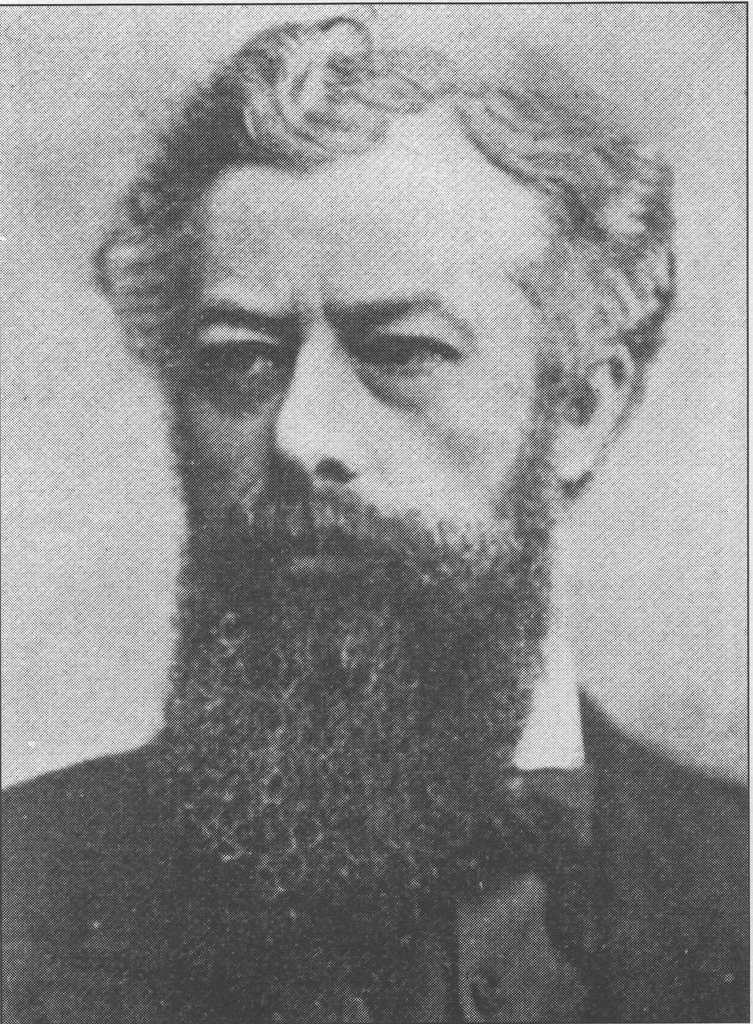
Edward Turney (pictured) was the editor of The Christadelphian Lamp (later renamed The Christian Lamp). In 1873, two years after the death of John Thomas, Edward Turney and Robert Roberts fell out over their understanding of the theological significance of the death of Christ. Roberts, without the ascent of his "managing brethren" or the Birmingham ecclesia (of which he was a member), unilaterally announced in The Christadelphian that he "withdrew fellowship" from Turney and all who held his beliefs. Andrew Wilson in The History of the Christadelphians 1864-1885 commented that:

"By this action, Roberts established a precedent for dealing with doctrinal dissidence ... However, stirring deep in the sensitivities of Roberts's brethren was the impression that this type of action was altogether too summary and abrupt amongst a congregation of brethren. In 1885, many Christadelphians reacted to a repetition of Roberts's conduct of 1873 by forming an entirely new sub-sect, known as the 'Suffolk Street fellowship'."


The fallout for Christadelphians was significant. In 1872 more conversions to Christadelphianism (as baptisms) were recorded in Nottingham as a result of Turney's preaching than in Birmingham where Roberts was based. A similar situation occurred in Essex where all the baptisms prior to 1873 occurred at Maldon as a result of David Handley's preaching. (David Handley [1822-1886] shared similar views with Edward Turney). After 1873 the number of baptisms in Nottingham and Essex dropped off sharply, and the Christadelphian ecclesias in these areas never regained their momentum. Wilson noted that:

"Apart from the Inspiration Controversy, which came to a head in 1885, no other schism appears from official figures to have influenced the Christadelphian movement so much as the 'Clean Flesh' heresy"* (p. 345).


Turney's supporters eventually took the name "the Nazarene fellowship" and, as far as I can tell, no longer call themselves Christadelphians. The Nazarene Circular Letter published by them continues to this day with its main readership, apparently, being among the Christadelphian community, "many of whom quietly support it" according to one of its members. In his Thinking It Over (Birmingham, 1963) Ernest Brady, a previous editor of the Nazarene Circular Letter, noted from his discussions with Christadelphians on a private basis that "a large proportion of Christadelphians" were in agreement with Nazarene views.

I mention this incident in 1873 to demonstrate that a pattern was emerging in the Christadelphian community, with Robert Roberts becoming increasingly authoritarian, and removing prominent brethren who refused to submit to his authority. It began with the disfellowship of the very capable leader George Dowie in 1864, was repeated in 1873 with the ostracism of the successful preachers Edward Turney and David Handley and their supporters, and came to a head with the excommunication of the popular speaker and writer Robert Ashcroft and the 1885 division (more on that later).

The Believers Movement was changing.


* This was the name given by Roberts' supporters to Turney's views on the atonement. Turney and his supporters were sometimes called Renunciationists by Roberts' supporters as they had renounced some of their earlier ideas.

What did Christadelphians set out to be? (4)

Early on in the Believers Movement there was an emphasis on the simplicity of the Gospel, and a resistance to any attempts to define their beliefs in a creed or statement of faith. For example, in 1855 John Thomas published a letter in his magazine from a correspondant referred to only as ‘Mary B.R.’ which included a one-paragraph summary in less than 300 words of her understanding of the Gospel. She expressed a desire to be baptised. John Thomas replied:

“Mary’s confession of faith is very intelligible, intelligent, and scriptural, and reveals no reason why water should be forbidden that she should not be baptised”.
(Herald of the Kingdom and Age to Come, March, 1855, page 69).


This confession did not speak of the mortality of man, the nature of the devil, the relationship between Jesus and the Father, the work of the Holy Spirit, or many other matters considered to be ‘fundamental’ by many later Christadelphians. Yet John Thomas commended it as ‘an intelligent confession’ and adequate for candidacy for baptism.

One of the prominent brethren in the Believers Movement in Scotland was George Dowie (1824-1895), being persuaded of John Thomas's views by March 1853 (a year before the 14 year old Robert Roberts was baptised in Aberdeed, Scotland). Andrew Wilson comments about him that:

"Dowie wished to preserve the exciting, experimental debatability of issues which had existed for his peers and himself in the period 1848-1864".

History of the Christadelphians: 1864-1885, Shalom Publications,1997, p. 325)


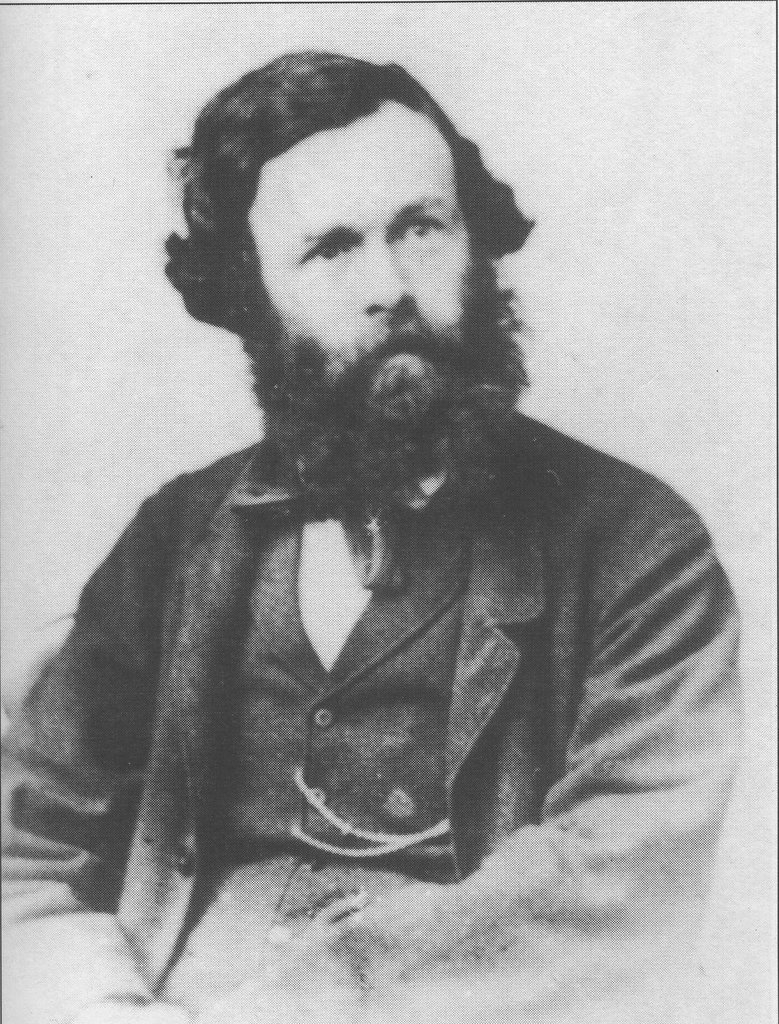
It seems that the Scots ecclesias generally were made up of such independent-minded individuals, and Dowie (pictured) was held in high esteem. He was a close friend of the Roberts family (and his signature is on Robert & Jane Roberts marriage certificate as a witness), but by 1864 they had fallen out.

For some years George Dowie published a magazine called The Messenger of the Churches (from 1858 to 1870) which circulated both in Scotland and England. Dowie published a hymn-book for the Believers in 1864, five years before Roberts produced his Golden Harp. He also wrote and published other literature for the Believers and was regarded as something of a leader, especially among the Scots Believers' churches.

Around this time John Thomas began to publish his views on the Revelation in a 3 volume series called Eureka (volume 1 was published in 1861, volume 2 in 1866 and volume 3 in 1868). Dowie disagreed with much of Thomas's interpretations, and presented an alternative view in his Messenger. Thomas made it clear to Roberts that he wasn't pleased. Relationships between Thomas and Roberts were already "frosty" (and Roberts refers to this in his autobiography). In 1864 Roberts wrote to Dowie saying that he no longer regarded him as a brother, and shortly afterwards there was a thawing in the frost between Thomas and Roberts. Later that year Roberts began publishing his own magazine, The Ambassador (later renamed The Christadelphian).

It would be unreasonable to infer from this incident alone that Roberts disfellowshipped his old friend in order to advance his own position within the Believers Movement (soon after to be renamed Christadelphians), were it not for the fact that history was to repeat itself with the disfellowship of another prominent brother, Edward Turney, in 1873 and the popular and charismatic Robert Ashcroft in 1884. (I will write further about these incidents in subsequent messages).

What is noteworthy about the disfellowship of Dowie is that it actually had nothing to do with his interpretion of Revelation - the reason for Thomas's displeasure. In an article published in April 1864 Dowie alluded to a belief in a personal devil. This gave Roberts the excuse he needed to be rid of Dowie and to regain Thomas's approval. A fellow Scot, James Cameron, pointed out that Roberts used the 'personal devil' matter as a sudden and opportunist ground for disfellowship. Until that point this had not been a cause of disfellowship and Roberts own brother-in-law pointed out his inconsistency in that another person known to Roberts was not disfellowshipped even though they held identical views to Dowie regarding the devil.

Several years later when Roberts visited the Aberdeen ecclesia (by this time known as Christadelphians) a confrontation took place and Roberts refused to break bread there because they had not endorsed his judgment in the case of George Dowie. It seems that many were not happy with the new tightening up of doctrinal views, especially when it was largely being controlled by a magazine editor, and not by consensus of the brethren.

An interesting thing about this incident is that it was apparent that not all the Believers held the same views as Thomas and Roberts about the devil, but that they did not regard differences of opinion about this as cause for separating. Another group which grew out of, or parallel with, the Believers Movement is the Church of God General Conference, sometimes called Church of God of the Abrahamic Faith. To this day some Abrahamic Faith individuals and churches hold views similar to Christadelphians on the identity of the devil, while others believe the devil to be a fallen angel. This is not a cause for division and the two views exist happily side-by-side in the same church or denomination. (The Church of God General Conference [COGGC] also resembles the Believers Movement churches more closely than later Christadelphians in that they generally practice open communion rather than closed communion)*.

Incidentally, it seems that George Dowie died as a Christadelphian. After the division in 1885 when many ecclesias broke free of Roberts' authoritarianism he joined an ecclesia not under Roberts control.

In summarising what Christadelphians set out to be, my point # 4 is this:

Christadelphians set out to have a simple faith and to tolerate diversity of opinions on many matters.


* The COGGC holds many of the same doctrinal distinctives as Christadelphians. For example, they are non-trinitarian, believe in conditional immortality, the second coming, the restoration of Israel, and the kingdom of God on earth.

What did Christadelphians set out to be? (3)

In summarising the reasons for the early success of Christadelphianism (before 1885) Andrew Wilson commented that:


"The openness of Christadelphianism in its early days permitted brethren, once converted, to stay nominally within their churches of origin, causing a wider spread of the new views amongst those with some sympathy for them than would have occurred under tighter restrictions regulating communion."


In its early days Christadelphianism was a movement rather than a denomination, with its roots in the Believers Movement (1848-1864) and the Restoration Movement (1800 to today) before that. Christadelphians maintained their contacts with other Christians and visited other churches, or remained within them. While later generations outlawed marriage with non-Christadelphian "unbelievers", John Thomas encouraged Christadelphians to marry "amiable, well-disposed, tractable, and God-fearing" people and wrote quite sternly against those elders who wanted to make it a rule (and a condition of fellowship) that Christadelphians could only marry Christadelphians. ("Is it lawful to marry unbelievers?" The Ambassador of the Coming Age 1866 pages 91 to 97).

Consequently there seems to have a been a healthy interchange of ideas between the Believers and early Christadelphians and other Christians. John Thomas's own writings reveal that he read widely and readily borrowed ideas from commentators and Bible scholars, regardless of their denomination. He was especially influenced by Bible scholars in the Restoration Movement and groups which sprang out of it (including groups we now know as the Disciples or Churches of Christ, the Adventists, the Church of God, the Christian Connection, the Bible Students, and others). In turn, Christadelphian speakers and writers seem to have had an influence on some people in these groups, and others. As a movement within the wider Body of Christ early Christadelphians were able to share what they had learned, while continuing to modify their own views. For a time the interchange was positive, productive and healthy.

Point # 3 in my summary of what Christadelphians set out to be is this:

Christadelphians originally saw their place within the Body of Christ, and sought both to learn and to influence as they grew in grace and knowledge. They recognised and appreciated the valuable contribution of other Christians and would also endeavour to share their own perspectives in the hope that the whole Body of Christ would come to maturity.

What did Christadelphians set out to be? (2)

A classic work in analysing the history of Christadelphianism is the thesis by Andrew Wilson (himself a Christadelphian) The History of the Christadelphians, 1862-1885: The Emergence of a Denomination *. He explained his objectives in his introduction, which I quote in part:

"Between 1864 and 1885, the development of the Christadelphian community was remarkable. Numerically, it increased from a few hundred to over 5,000 brethren, with an eventual annual rate of about 400 adult baptisms; intellectually, it increased to the point where it had interested a number of notables and academics such as W.E. Gladstone, and had baptised others such as Professor David Evans; polemically, leaders of the movement had challenged or actually engaged in debate not only prominent figures in rival religious groups - ranging from Edward Hine of the British Israelites to the Archbishop of Canterbury - but also non-religious leaders of thought such as Charles Bradlaugh, and non- Christians like Louis Stern the Jew. After 1885, nothing like the same degree of interest or success, as measured in annual baptismal numbers, was registered by Christadelphians.

"The reasons why a small group should attract such interest and support within a twenty year period without one major denomination from which to draw its membership, and why its effervescence should evaporate so quickly after 1885, are the major puzzles which this study sets out to solve”.


Wilson concludes his chapter on "The History of Christadelphians: 1864-1884" with this paragraph:

"Thus, the period 1864-1884 witnessed a whole range of achievements in Christadelphia: numerical success in conversions; success in maturity in dealing with the churches and intellectuals around them, amounting to selective ecumenicism; success in the streamlining of organisation - Birmingham clearly becoming the epicentre of worldwide activity by Christadelphians. Only in Church government was Christadelphianism lacking in development. On the rock of failures in that area, the ship of success foundered in 1884-5, and much of the precious cargo was lost".


To support his claim that in 1884-85 "much of the precious cargo was lost", Andrew Wilson includes extensive statistical information to demonstrate the sudden and dramatic departure of a large number of brethren from the Christadelphian community. In overall terms the loss was between 35% and 44% of the brethren in the U.K. compared to a national annual increase in population of about 10%.

Andrew Wilson summarises the reasons for the success of the Believers Movement and Christadelphianism to 1885 and includes the following:

The original openness of the Christadelphian community and the accessibility of its creedal formulae to change based on empirical data from the Bible. This commended itself to men from a wide spectrum of orthodox persuasions whose Christianity was of an open-minded, individualist and fundamentalist-rationalist stamp.


Throughout his work Andrew Wilson names some of the academics and scholars of his day, including theologians, professors of Hebrew, and clergymen, who joined the Believers Movement or Christadelphianism in its early days but then left after the "inspiration controversy" and the division of 1884-85.

Much of this openness within the brotherhood and "the accessibility of its creedal formulae to change" was due to the considerable influence of John Thomas whose own views on doctrinal matters changed with increasing maturity, and who steadfastly resisted all efforts to dogmatise the faith in a creed or Statement of Faith. He was challenged on one occasion for having changed his mind yet again, to which he wisely replied, “Must I ever hold to one belief for the sake of consistency? May such a calamity never befall me. I will change my mind every day if need be until I get it right at last.”

If we take the early success of the Believers Movement and Christadelphianism as our benchmark, then point # 2 in my summary of "what did Christadelphians set out to be?" is this:

Christadelphians set out to have open minds. They set out to study, read, learn and mature in their faith and would change their minds frequently in the process. They set out to be "teachable" and open to new ideas and eager to explore and discuss them.


* Andrew R. Wilson B.A., M.A., A.R.Hist.S., Shalom Publications, 1997 (fp 1985).

What did Christadelphians set out to be? (1)

It's clear that Christadelphians cannot be defined by whether or not they subscribe to a particular Statement of Faith. The "Central fellowship" Christadelphians accept the Birmingham Amended Statement of Faith (BASF) as "a true definition" of the first principles of the faith. The Unamended Christadelphians reject this statement of faith and go with an earlier ("unamended") version (BUSF). Yet both "amended" and "unamended" Christadelphians, while not accepting each other in fellowship, consider each other to be Christadelphians. This is evident from the fact that when individuals move from one fellowship to the other (as they frequently do) they don't need to be re-baptised. Their baptism is considered to be legitimate, regardless of whether they believed the amended or unamended version of the statement of faith at the time. The same is true of people moving from the Dawn fellowship to the Central fellowship, and vice versa, or the Berean, Old Paths, or the score or more of other 'fellowships'.

Over many years I have come in contact with hundreds of Christadelphians who have never seen a statement of faith, and were certainly not asked to endorse it when they were baptised. Many ecclesias throughout the world, even those in the "Central fellowship" either have their own statement of faith or they operate without one at all.

From the formation of the Believers Movement (in 1848-1850 - the community which eventually became known as "Christadelphian" in 1864) to the major division in 1884-85 there was no widespread use of any statement of faith. In fact the Birmingham statement of faith was not written until 1873, and even then was not universally accepted. So for more than 20 years the Believers Movement and early Christadelphianism functioned and grew steadily (say would say dramatically) without any statement of faith at all.

So Christadelphians cannot be defined by a statement of faith.

Over ten years ago I wrote a series of articles called "Christadelphians - where are we headed?" which were published in Christadelphian Forum (from October, 1992, to April, 1993).

The following quote comes from this series.


THE SPIRIT OF DISCOVERY

John Thomas has been described as "a pioneer, a discoverer ... What appealed to him was to wriggle free of what he considered the mental shackles imposed by orthodoxy, so he could soar high in the spiritual etherea and see vistas, within the Bible, of God's past, present and future plans”. *

While writers such as Robert Roberts and many others have done a service to our community by simplifying some of the difficult writings of John Thomas, few have approached the Scriptures with the same spirit of discovery. A notable exception would be Harry Whittaker who was possibly the most prolific writer the Christadelphian community has seen. To have this spirit of discovery is to not be afraid of finding something in the Scriptures which may challenge our preconceived notions or traditionally held ideas.

We need to build on the work of the ‘pioneers' like John Thomas and look closely at what the Scriptures say on matters which they did not write about in detail. The range of subjects here is vast, but some important work needs to be done on matters such as the sanctifying work of the Holy Spirit in the believer's life; the role of women in the church; our relationships with the wider community; communicating the Gospel to the world; prayer; structuring our community for optimal spiritual growth; and many more. There are always risks associated with pioneering or discovering. We may have to make some changes which will be uncomfortable for some at first. We can be certain, however, that the benefits will far outweigh any imagined disadvantages.

* Andrew R. Wilson B.A., M.A., A.R.Hist.S., The History of the Christadelphians 1864-1885, Shalom Publications, 1997 (fp 1985).
This "spirit of discovery" was one of the hallmarks of the Believers Movement and early Christadelphianism, and was undoubtedly one of the main factors in the early growth of the community.

John Thomas wrote:

"Search the scriptures with the teachableness of a little child, and thy labour will not be in vain. Cast away to the owls and to the bats the traditions of men, and the prejudices indoctrinated into thy mind by their means; make a whole burnt offering of their creeds, confessions, catechisms and articles of religion; and, after the example of the Ephesian disciples, hand over your books of curious theological arts, and burn them before all. These mountains of rubbish have served the purpose of a dark and barbarous age; the Word, the Word of the Living God alone, can meet the necessities of the times."

(Elpis Israel 14th Edition, Birmingham, 1970, pp 5-6. fp 1848. My emphasis.)
In later works John Thomas emphasised that he was opposed to "creeds and denominations" - something which he had apparently adopted from Alexander Campbell and the Restoration Movement (Disciples/Churches of Christ) - and it's noteworthy that the first statement of faith was not adopted until after his death. If acceptance of a statement of faith defines someone as a Christadelphian, then John Thomas wasn't a Christadelphian.

So point # 1 in my summary of "what did Christadelphians set out to be?" is this:

Christadelphians set out to be people with a spirit of discovery; people who are guided by the Word of God but who reject creeds and statements of faith as having any authority; people who have a pioneering drive and ambition to find the truth for themselves and in allowing the Bible to interpret itself.

What is a Christadelphian?

I have removed the three messages which I posted during the past week under the heading "What is a Christadelphian?"

I will, however, be reposting edited and revised versions very soon.

The need for a revision came when I realised that what I was describing was what Christadelphians set out to be, what they could have been, and what some Christadelphians are. There are, however, many kinds of Christadelphians and my generic description could certainly confuse a non-Christadelphian who read it and then expected to find a whole lot of Christadelphians matching the description.

Before launching back into the series I need to explain a few things, mainly about Christadelphian history.

Many articles say that Christadelphians were founded by John Thomas in 1848. In fact, the name Christadelphian was coined by John Thomas in 1864 during the American Civil War. The movement which began around 1848-1850 had no denominational name for many years, and, as its roots were in the Restoration Movement (which began with the preaching of Alexander Campbell) which resisted all forms of denominationalism, the churches which were later to be called Christadelphian also resisted a denominational name. Throughout the USA and Britain these churches went by the names of Believers, Baptised Believers, the Royal Association of Believers, Baptised Believers in the Kingdom of God, and other similar names. They generally referred to each other simply as "believers". Strictly speaking there were no Christadelphians prior to 1864, although many of the Believers and Believers' churches which existed between 1848 and 1864 later adopted the name Christadelphian. In the past when I have referred to "early Christadelphians" I have sometimes had this 1848-1864 movement in mind, but to avoid any confusion in future I will endeavour to refer to it as the Believers Movement, and to individual members as Believers (with a capital B), rather than as Christadelphians.

The other point I need to make is that there are a wide variety of Christadelphians today. There are, of course, several different "fellowships" and sub-groups within Christadelphianism all claiming to represent "true" Christadelphianism. But even within some of these groups there is considerable diversity of thought and attitudes.

What I will be writing about in the subsequent series of messages is not so much what a twenty first century 'typical' Christadelphian looks like (if there is such a thing as a typical Christadelphian), but rather:

  • What kind of community the Believers set out to build
  • The attitudes which contributed to the success of the Believers Movement (1848-1864) and early Christadelphianism (1864-1885)
  • The strengths of the Believers Movement and early Christadelphianism which have continued in some parts of the Christadelphian denomination and which, if revived, could see a change in fortunes for the wider Christadelphian community
  • What went wrong? Why is the Christadelphian denomination today so different to the Believers Movement?

Why do I refer so much to history? We're almost all probably aware of the quotation "Those who cannot remember the past are condemned to repeat it" (George Santayana in 1905). The more I look at Christadelphian history the more I see it repeating itself. Perhaps by looking again at the lessons to be learned from the past we can make a difference for the future.

I am also changing the heading for the series from "What is a Christadelphian?" to "What did Christadelphians set out to be?"

Saturday, January 14, 2006

Back from holidays

Well, I'm back. We just enjoyed two weeks of holidays ("vacation" as the Americans would say) and some much-needed rest and recreation. It was a great opportunity to catch up on some reading and to clear my head. I had very limited internet access over the past two weeks, hence the absence of any posts on my blog for a while.

Anway, I'm recharged and ready to get back into it. I plan to post some messages on the threads I started last year, including the series I promised to commence on "Build my church", as well as some more on "Characteristics of Christian leaders" and "Intimacy with God". I also plan to do a short series on "What is a Christadelphian?" which should be a bit different to the usual approach to this subject (that shouldn't surprise you). I also plan a couple more posts on "The Lord's table" (typing up some lose ends). That should keep me busy for a while, and maybe out of trouble (or maybe not).